Knowledge base › Self-knowledge
Schema therapy at home: spot and rewrite your recurring patterns

Is there a sentence you believe about yourself, over and over, in hard moments? "I'll never make it." "I'm too much." "If I fail, I'll be rejected." These aren't facts — they're schemas: old, automatic thought patterns that often come from childhood experiences and quietly steer you as an adult. The good news: they can be spotted, and gradually rewritten — even at home, with a single journal.
What is a schema?
A schema is a deeply ingrained belief about ourselves, others, or the world. It's like a pair of glasses through which we interpret events — except we forget we're wearing them. When a situation "triggers" a schema, the old belief instantly feels true, without thinking, and it determines what we feel and do. We don't decide it — it simply happens to us.
Schema therapy — following the work of American psychologist Jeffrey Young — focuses precisely on these early, stubborn patterns. Young observed that behind many recurring difficulties lie the same few "early maladaptive schemas": the sense of abandonment, mistrust, being doomed to fail, defectiveness, or unrelenting standards. The goal isn't to "get rid of" them, but to make them conscious, and to learn to notice when the old pattern is speaking for us.
In short
- A schema is an automatic, often childhood-rooted belief that feels true, but isn't necessarily so.
- Behind most of your hard moments there aren't ten problems, but two or three recurring schemas.
- What you write down and recognise, you can question — that's the essence of reframing.
Before you read on
This is a self-knowledge tool, not therapy and not a diagnosis. If you struggle with persistent anxiety, depression, or processing trauma, see a professional — journaling works well alongside it, and many therapists specifically recommend keeping notes between sessions.
How do you know it's a schema talking?
There are three tell-tale signs. The first is intensity: your reaction is disproportionately strong for the situation — an innocent remark ruins your day for days. The second is familiarity: the feeling of "here we go again," as if an old film is replaying. The third is absoluteness: the thought is total and sweeping — "always," "never," "everyone." When you feel these three together, chances are you're not reacting to the present situation, but to an old pattern.
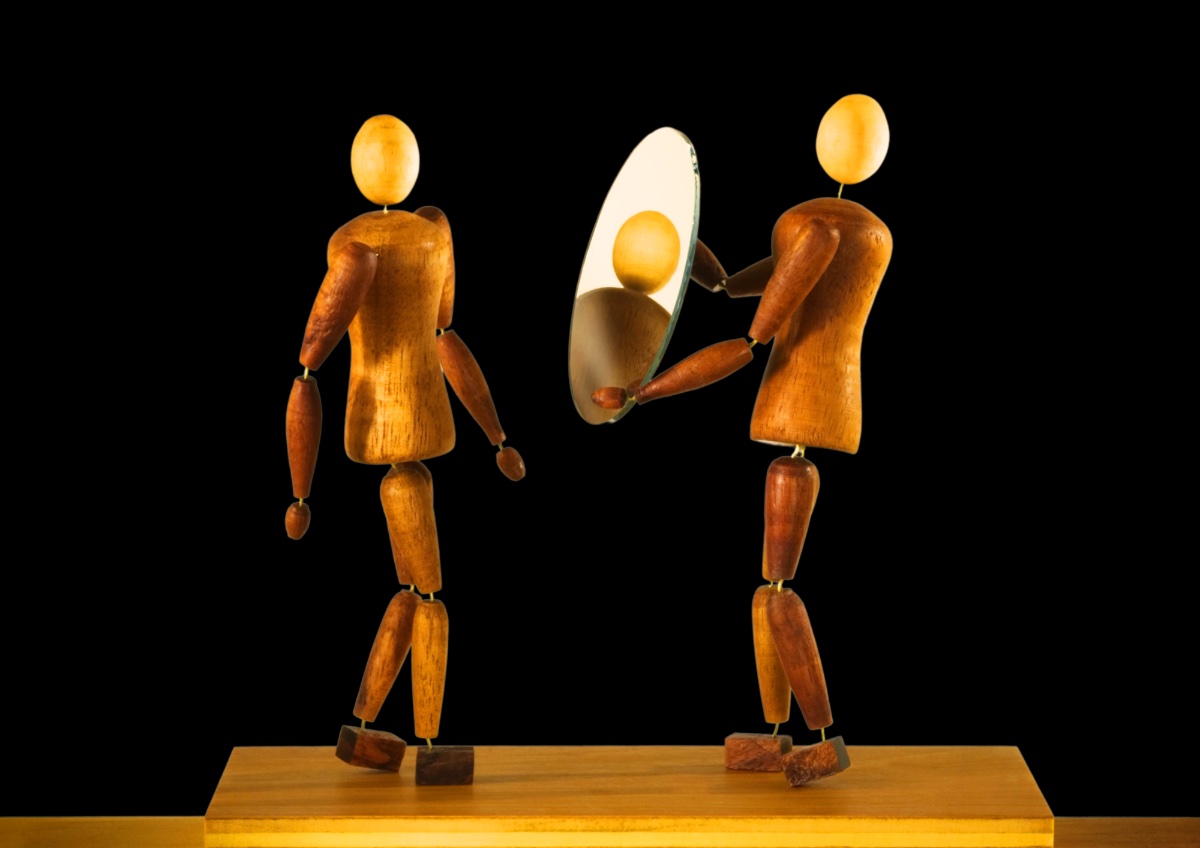
The method: six steps to rewrite a hard moment
Next time a strong, uncomfortable feeling washes over you, don't try to "solve" it immediately, and don't suppress it. Write it down. These six questions give you a full loop — the same structure that cognitive behavioural therapy (CBT) thought records use:
- Trigger. What exactly happened? A sentence, a message, a situation. Just the fact, without interpretation — as if a camera recorded it.
- Automatic thought. What was the first thing you believed about yourself or the situation? "I'm not good enough." Write it down word for word, as it sounded in your head.
- Emotion. What did you feel, and how strongly on a scale of 0–10? Anxiety, anger, shame, emptiness? Name it — naming an emotion alone lowers its charge.
- Behaviour. What did you do as a result? Did you avoid the situation? Overcompensate? Shut down, or attack? This is where you see how the pattern holds you.
- Reframe. What would be a fairer, more compassionate sentence? Not a positive lie — but what you'd say to a good friend in the same situation.
- Outcome. What did you learn? How do you feel now that you've written it down? What will be different next time this pattern kicks in?
The goal isn't to never have hard thoughts — it's to recognise when an old schema is speaking for you.
A quick example
Say your boss didn't reply to your message. Trigger: "I wrote at noon, no reply by 5 pm." Automatic thought: "I must have messed up, they're angry with me." Emotion: anxiety, 7/10. Behaviour: I checked my phone ten times, couldn't focus on work. Reframe: "They may just be busy; no reply isn't proof of anger. If it matters, I'll ask tomorrow." Outcome: anxiety dropped to 3/10, and I saw this "rejection" pattern has come up many times before.
Why does writing it down work?
When a feeling just swirls in your head, it seems endless and true. The moment it lands on paper — or a screen — three things happen at once. First, you create distance from it: you're no longer inside it, you're looking at it. Second, you put it into words, and research shows that labelling emotions (known as affect labelling) measurably reduces activity in the brain's threat centre, the amygdala. Third, the pattern becomes visible when the same schema recurs.
That third point matters most. After a few weeks of entries, something emerges: behind your seemingly separate difficulties usually lie the same two or three beliefs. And once you see a pattern with your own eyes, in black and white, you no longer live it as an unquestionable truth, but as an old habit you can challenge.
Common pitfalls — and how to avoid them
"I don't have time." The full six steps take two or three minutes. You're not writing an essay, you're jotting a note to yourself. "Nothing comes out." Normal at first — reframing is a skill that develops. Start by filling in just the first four steps. "It hurts too much to write." If a memory is unbearable, don't force it alone — that's exactly where a professional's presence matters. "I skipped a week." No problem. Schema work isn't about a streak, but about having somewhere to return when a pattern kicks in.
How to start today
You don't have to be perfect, and you don't have to "feel ready." A single entry counts. Pick one moment from today that felt bad — even a small thing — and walk through the six questions. Then tomorrow, when something kicks in again, do it once more. The system, the returning, matters more than the length or the perfect wording. A few weeks in, you won't just handle hard moments better — you'll know yourself better.
Mirrify
Keep your schema journal in Mirrify
Mirrify's Schema journal walks you through exactly these six steps, and the AI helps you reframe — and reads the recurring patterns that are hard to spot alone. Every entry stays yours, encrypted.
- Journal, morning and evening reflection, habits, goals and to-dos — in one system.
- An AI mentor that remembers your earlier entries and shows you your patterns.
- Write with no connection: it syncs as soon as you are back online.
Related from the knowledge base
 Daily practiceMorning reflection: the routine that gives your day directionHow to start with intention and close with awareness.8 min→
 Direction & valuesIkigai: find your direction with 4 questionsThe method that connects what you love and what you're good at.8 min→
 GoalsSMART goals in practiceFrom a big vision to the daily step you actually take.9 min→
 Self-knowledgeAttachment stylesRead your last 30 days instead of taking a quiz.12 min→
 Self-knowledgeA journaling app for ADHD, after burnout, or…The right journaling or self-knowledge app depends on your situation.11 min→
 Self-knowledgeThe inner childThe “inner child” is not a separate person inside you but a working…11 min read→
 Self-knowledgeShadow Work JournalingShadow work journaling prompts in five groups: irritation, envy, shame,…14 min→