Knowledge base › Self-knowledge
Introvert or extrovert? The test asks the wrong question

This is the best-known pair in self-knowledge and the most misunderstood. Most people think the introvert is shy and the extrovert is talkative — and that simply isn’t true. The axis isn’t about whether you like people, it’s about where your energy comes back. And it isn’t best settled with a questionnaire: a week of measuring gives a more accurate answer than any test.
What this axis actually measures
Introversion–extraversion is one of the oldest and most studied personality traits. Its core isn’t social skill but energy economics: where you recharge, and what drains you.
For those on the extravert side, a stimulating situation — people, conversation, movement — typically charges them: they come out of a good evening with more energy than they went in with. On the introvert side the same evening can be thoroughly enjoyable and still cost: afterwards solitude is needed to recover.
From which it immediately follows why everyday usage misleads. An introverted person can be an excellent speaker who enjoys the stage — they just sit in silence for two hours afterwards. An extravert can be anxious and unsure in company — and still be recharged by it. Behaviour and energy direction are two different things.
The four myths
These are the most common misunderstandings, and each one makes people file themselves in the wrong category.
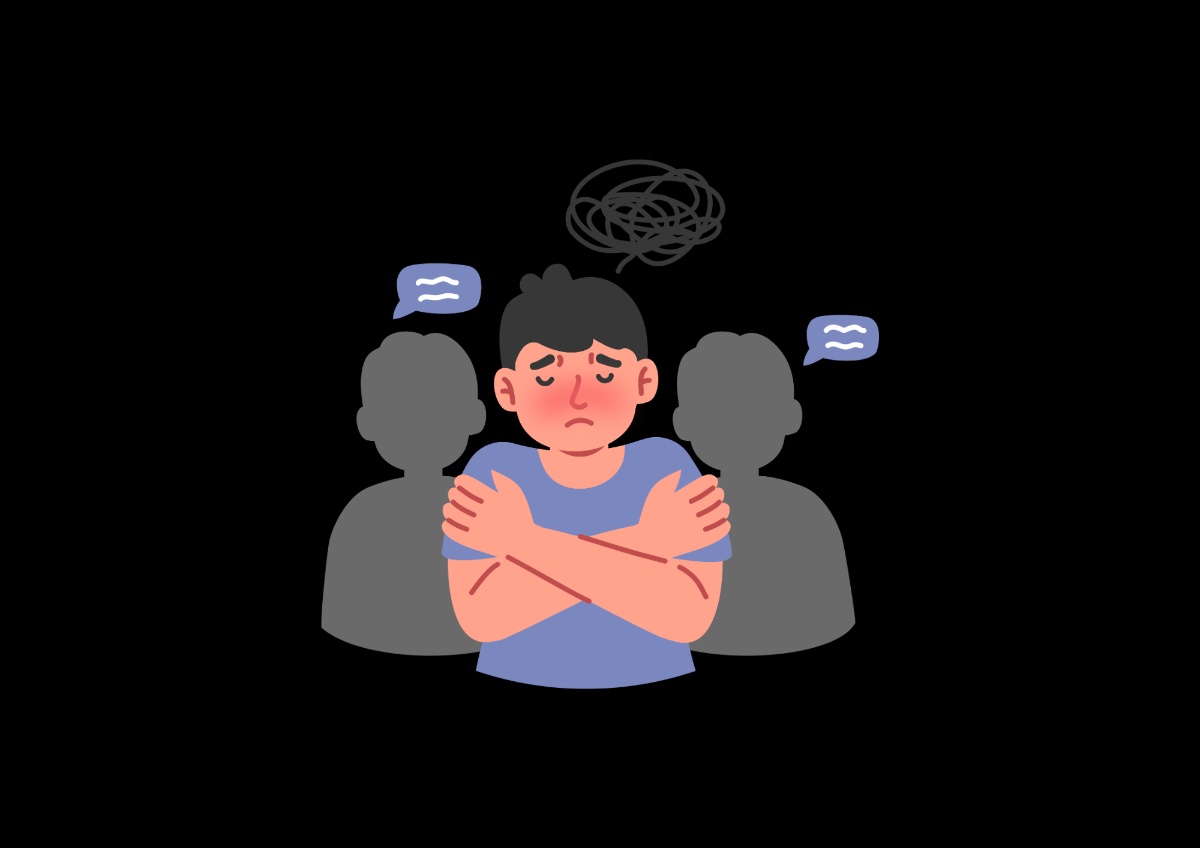
- 1. “Introverts are shy.” Shyness is anxiety — you fear being judged. Introversion is an energy setting. The two often go together but are not the same: there are confident introverts and shy extraverts, and what each needs is completely different.
- 2. “Extraverts are shallow.” That isn’t a description, it’s an insult. Extraversion isn’t about the depth of thought but about whether thinking happens during — out loud, with others — or beforehand, in silence.
- 3. “You’re either one or the other.” This is the biggest error. The axis is a scale, and most people fall towards its middle. They even have their own name — ambivert — and that isn’t an in-between state, it’s the most common place to be.
- 4. “This is fixed for life.” The baseline is fairly stable, but the situation shifts it strongly. The same person comes out of a dinner for four and a forty-person event with different energy — and life circumstances (a small child, a job, sleep) can move it for months.
The most common place is the middle
If test results bounce around for you, that isn’t a flaw in the measurement — it’s the answer: you’re very likely in the middle of the scale. For ambiverts the useful thing isn’t the label but WHICH situation moves them in which direction.
Why most tests mislead
There are three problems with questionnaires, and all three push in the same direction.
The first: they ask about behaviour, not the after-effect. “Do you enjoy going out?” — people answer with what they’d like to think about themselves. The useful question isn’t that but WHAT HAPPENED afterwards: did you get home drained, or buzzing?
The second: your current state carries them away. On a tired weekday everyone declares themselves more introverted. After a good weekend, more extraverted. So a single completion mostly measures what kind of week you’ve had.
The third: the label reassures, and with that it closes the question. “I’m an introvert” — and from then on it explains everything, instead of you looking at what exactly drains and what charges you. Our article on self-knowledge tests covers this too: the test is the start, not the answer.

A week that answers it better
If you really want to know where you are on the axis, don’t fill anything in — measure. One line a day, in the evening, in one minute.
- Write down the most people-heavy situation of the day. A meeting, family, a phone call, a party, the school gate — anything with more than one person.
- Add a number from minus three to plus three: AFTERWARDS did you have more or less energy than before. Not whether it was nice — what it did to you.
- And one word about the situation: how many people, did you know them, did you do the talking, did it have an ending.
At the end of the week, look at the numbers. If most people-situations are minus, that’s the introvert side. If plus, the extravert side. If it’s mixed — and it probably will be — then the third column is the point: WHICH situation was plus and which was minus. That is far more usable than a label.
In brief
- The axis isn’t about sociability but about where your energy comes back.
- Shyness and introversion are two different things — they need different responses.
- Most people are in the middle of the scale (ambivert), and that isn’t an in-between state.
- A test asks about behaviour; the useful question is the after-effect.
- A week of measuring beats any questionnaire — and it gives you something to do.
What the measurement usually reveals
After many such weeks three recurring insights show up, and all three are more useful than a category.
- It isn’t the number of people that decides, but whether they’re familiar. For many, four strangers drain more than twenty acquaintances. No test asks this.
- The role matters, not the situation. The same meeting is a plus if you run it and a minus if you have to listen throughout — or exactly the other way round. This is strongly individual, which is precisely why it’s worth measuring.
- Unfinishedness takes the most. A conversation that broke off or left a question open keeps costing for hours. It wasn’t too much company — it was the open loop.

What to do with the result
The category on its own is worth nothing. The value lies in arranging your day differently — and that means different things on the two sides.
If you’re on the introvert side, the key realisation is that recharging isn’t a reward but fuel. Anyone who tries to squeeze the quiet hour out of what’s left over will reliably miss it. Schedule it like any other appointment — and preferably BEFORE big events, not only after them.
If you’re on the extravert side, the blind spot is usually the other direction: a long solitary stretch of work doesn’t bring you concentration but depletion, and you’re prone to calling that laziness or lack of motivation. For you a break isn’t silence but people — a ten-minute conversation gives more than half an hour alone.
And if you’re in the middle: you don’t need to pick a direction, you need to alternate. The most common mistake is categorising yourself on the basis of one bad week and then living for months in the wrong mode.
When two different people live together
The axis causes friction most visibly in relationships and flatshares — and almost always over the same misunderstanding.
The scene is familiar: you come home from a dinner, one of you is buzzing and wants to talk, the other just wants to sit in silence for twenty minutes. To the first this looks like rejection (“they’re not interested in what happened”), to the second like a demand (“does it have to be right now?”). In fact neither did anything wrong: the same evening charged one of them and spent the other.
The solution isn’t compromise but sequence. The quiet twenty minutes aren’t instead of the conversation, they’re before it — and the conversation is better afterwards. Saying it out loud once (“I’m not angry with you, I need twenty minutes and then I’d love to”) removes a recurring conflict with one sentence.
The same applies at work: an open office and constant coordination is a natural habitat for one side and a daily line on the energy bill for the other. Here too the question isn’t who copes better, but who can do deep work when — and that’s a matter of scheduling, not character.
What not to do
Three reflexes come with the label, and all three do harm.
- Don’t use it as an excuse. “I’m an introvert” is not an answer to a difficult conversation you didn’t have. The energy direction explains what it costs you — not that you don’t have to do it.
- Don’t build your life around a single test. One completion measures what kind of week you’ve had. Don’t base a big decision (a job, a move, a relationship) on it.
- Don’t try to switch sides. The baseline isn’t a fault and isn’t to be fixed. What can be developed is the SKILL (presenting, small talk, solitary focus) — the energy direction stays.
Where a system helps
The hard part here is that the effect is delayed. You don’t evaluate a social evening while it happens but the next day — and two weeks later all that remains is “I’ve been tired lately”.
That’s why Mirrify has no separate personality test — what it has is that the daily entry, your mood and your energy sit in the same system. After a few weeks you don’t have to say from memory which kind of situation charges or drains you — you can see it. It’s the same mode as the energy map, narrowed to a single axis.
What it doesn’t give: it won’t sort you into a type and it won’t pass judgement on you. The week’s lines are yours to write — the system only helps you have something to compare.

The one sentence worth taking away
If you take one thing from all of this, let it be: the question isn’t who you are, but what charges you. The first is answered with a label you can’t do anything with. The second with a list you can fit into your week.
And if after the week it turns out that almost EVERYTHING is a minus for you — the silence as well as the people? Then it isn’t about this axis any more. In that case sleep and exhaustion are worth looking at; our article on the signs of burnout covers that.
Frequently asked questions
What is the difference between an introvert and an extrovert?
Not sociability but the direction of energy. On the extravert side a stimulating situation — people, conversation — typically charges you: you come out with more energy than you went in with. On the introvert side the same situation can be thoroughly enjoyable and still cost, with solitude needed afterwards to recover.
Are introverts shy?
No — this is the most common myth. Shyness is anxiety: you fear being judged. Introversion is an energy setting. The two often go together but are not the same: there are confident introverts and shy extraverts, and what each needs is completely different.
What is an ambivert?
Someone who falls towards the middle of the scale — and that is the most common place, not some in-between state. If test results bounce around for you, that isn’t a measurement error but the answer itself. For ambiverts the useful thing isn’t the label but which situation moves them in which direction.
Why aren’t introvert tests reliable?
For three reasons: they ask about behaviour rather than the after-effect (“do you enjoy going out?” instead of how you got home); your current state carries them away (on a tired week everyone declares themselves more introverted); and the label reassures, closing the question instead of you looking at what exactly drains you.
How do I find out where I am on the axis?
With a week of measuring. One line a day: the most people-heavy situation of the day, a number from minus three to plus three for whether you had more or less energy AFTERWARDS, and one word about the situation (how many, familiar or not, did you do the talking). At the end of the week the numbers tell you — and more usefully, which kind of situation moves you which way.
Can whether I’m an introvert or extrovert change?
The baseline is fairly stable, but the situation shifts it strongly, and life circumstances (a small child, a job, sleep) can move it for months. The same person comes out of a dinner for four and a forty-person event with different energy. That’s why it isn’t worth categorising yourself on one completion.
Can you develop out of being an introvert?
The skill yes, the energy direction no — and the latter isn’t a fault. Presenting, small talk and solitary focus are all learnable regardless of where you are on the axis. What the energy direction tells you is what it COSTS you, and how much recovery to plan alongside it.
Mirrify
Turn reading into practice
Mirrify brings your journal, habits, goals and an AI mentor that works from your own data together in one place.
- Journal, morning and evening reflection, habits, goals and to-dos — in one system.
- An AI mentor that remembers your earlier entries and shows you your patterns.
- Write with no connection: it syncs as soon as you are back online.
Also worth reading in the knowledge base
 Self-knowledgeEnergy mapMeasure in a week what charges and what drains you.11 min read→
 Self-knowledgeSelf-knowledge testsWhat they measure — and what they don’t.8 min→
 Daily practiceThe signs of burnoutWhen everything drains you.9 min→
 Daily practiceSetting boundariesHow to say no without guilt.11 min→
 Self-knowledgeSocial anxietyNot shyness, and not temperament.11 min read→
 Self-knowledgeAlways tiredTiredness isn’t one thing.12 min read→