Knowledge base › Daily practice
The signs of burnout — and what to do about it
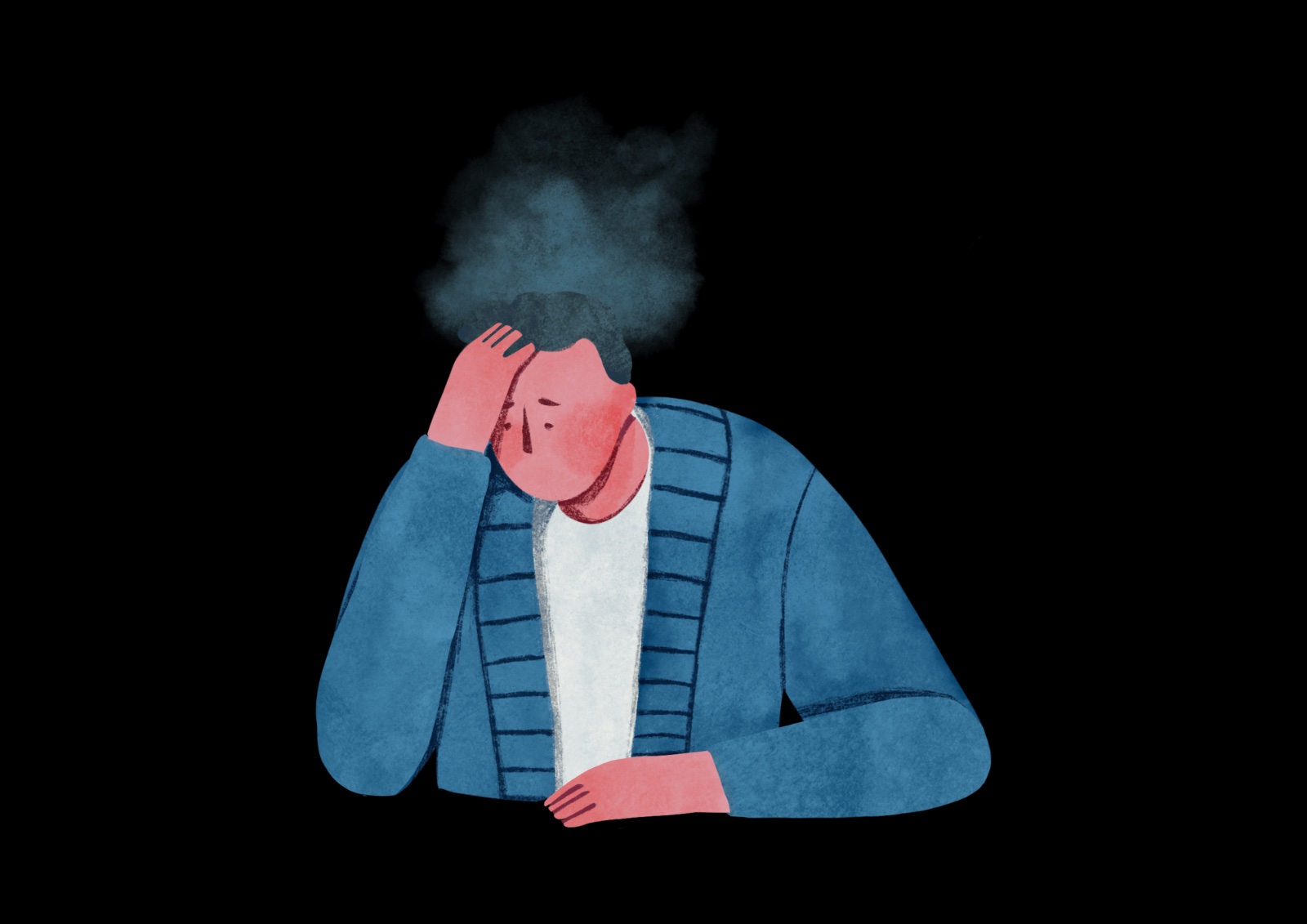
Burnout is three things at once: deep exhaustion, a cynical distance from what used to matter, and the sense that nothing you do makes a difference. It isn't one bad week — it's a slope. The good news: the slope shows up early, and recovery isn't a matter of willpower but of restoring the balance between demand and recovery.
What burnout actually is — and how it differs from tiredness
Burnout is not ordinary tiredness, and it is not a character flaw. The most established research model, the Maslach description, sees it as three reinforcing dimensions: deep emotional exhaustion; cynicism or depersonalization (distance from your work and from people); and a reduced sense of efficacy — the feeling that whatever you do, it doesn't count, you aren't good enough. If all three feel familiar, that is itself a signal.
Everyday tiredness is resolved by good sleep, a day off, or a holiday. Burnout is different: you rest, and still wake up empty. The difference isn't in your energy level but in the fact that recovery no longer recovers you. This is the signal most people ignore for far too long, because they assume they just need to pull themselves together — yet the pull-yourself-together logic is exactly what deepens the slope.
It's worth saying plainly: burnout is a process, not a moment. Nobody flips from tired to burned out overnight; the balance slides over weeks, often months. That's exactly why it can be caught in time — if you know what to look for, and if you check in on your own state regularly instead of just getting through the days.

The early warning signs and the stages of the slope
Most burnout doesn't begin with an explosion, but with small discolorations. The morning resistance that wasn't there before. The short temper with people you love. The sense that the weekend is only a recharge for the next week, not real rest. Individually these are nothing; together they are a direction — and the direction tells you more than any single day.
The early signs often show up first in relationships, not in performance. You withdraw, initiate less, grow more cynical. If someone close to you says you've changed, it's worth listening — they sometimes see the slope before you do, because they don't have a built-in blind spot toward your own fatigue.
Burnout usually deepens in stages. It often starts with over-revving enthusiasm: more responsibility, fewer boundaries, the belief that you have to solve everything. Then comes stagnation, when energy drains but the pace stays. After that, frustration and cynicism, and finally deep exhaustion and apathy, when even caring runs out. Not everyone moves through every stage the same way, and the slope is reversible — the more easily, the earlier you recognize where you are.
The root causes — not just too much work
The most common myth is that burnout is caused purely by workload. Research paints a subtler picture: six areas matter. Overload is only one. The others are lack of control (you don't decide about your own work); unfair or absent reward; the breakdown of community; a sense of injustice; and value conflict, when you're made to do something that clashes with what you believe in.
This matters because it shows that fewer hours alone don't always heal. If the problem is lost control or lost meaning, you return to the same place after the day off. The first step of recovery is understanding which area has been damaged for you — because a solution applied in the wrong place (more rest for a value conflict) breeds disappointment and reinforces the feeling of helplessness.
It's worth walking honestly through all six areas and asking one question of each: here, do I mostly refill or mostly drain? The answers often surprise people. Many believe workload is crushing them when what actually hurts is that their work has no visible meaning, or that the system they work in doesn't feel fair.

The physical signs you shouldn't ignore
Burnout doesn't stay in the head. Chronic stress speaks in the body's language too: disrupted sleep (trouble falling asleep or waking early), headaches, stomach and digestive complaints, muscle tension in the shoulders and neck, more frequent colds as the immune system weakens. Many also notice appetite changes or a persistent racing heart.
These signs blend easily into everyday malaise, so it's worth looking at them as a pattern. One headache means nothing. Three weeks of recurring headaches, poor sleep, and constant tension together are a message worth taking seriously — and worth raising with a doctor, to rule out physical causes.
What to do first
Recovery doesn't begin with one big decision, but with small, repeatable steps. The goal is to bring back the balance between demand and recovery — and for that, you first have to see where your energy is going.
- Track energy, not just tasks. Once a day, note when you were most drained and when you felt restored. Over a week, the pattern appears.
- Build in micro-recovery. Don't wait for the big holiday. Short daily breaks — a walk after lunch, five minutes screen-free, one real exhale — count for surprisingly much.
- Draw a boundary that's small but sustainable. A single no, a single after-hours notification muted. A boundary works only if you can actually hold it.
- Reconnect with meaning. Write down the one thing in your work or your day that matters to you. Meaning is the antidote to cynicism.
- Talk to someone about it. Withdrawal deepens the slope. An honest conversation, on its own, lightens the load.
Don't expect these steps to reverse the slope overnight. Burnout builds over weeks and months, and recovery asks for time too. The goal isn't a fast fix but a durable change of direction: each day, one notch more recovery than depletion. That small, repeated surplus is what brings energy back over time — not a single heroic decision.

Rebuilding recovery
When you're burned out, rest alone doesn't always refill you — because passive rest (scrolling, TV) isn't the same as real regeneration. Recovery comes in several kinds: physical (sleep, movement), mental (switching off from decisions), emotional (connection, tenderness), and the one most people skip — meaningful recovery, doing something that has stakes for you.
Ask yourself: which kind of recovery are you most starved of? Many sleep enough yet stay empty, because the emotional or meaningful tank has run dry. Recovery isn't more rest — it's replacing the missing kind of recovery, and it's personal: what refills one person drains another.
Preventing relapse
Recovering from burnout is half the work; preventing relapse is the harder half. Burnout is rarely a flaw of personality — far more often it's the product of environment and habits. If you return to the same pattern, you arrive at the same place, only faster, because your system has already learned the slope.
The key to prevention is regular self-examination: a weekly glance at where your energy and your boundaries stand. You don't need an elaborate system — a few honest questions a week is enough: where did I drain, what refilled me, where did I cross my own boundary. The goal is to spot the first signs of the slope weeks earlier, not at rock bottom. Mood tracking and building self-awareness build exactly this early-warning system.
When to seek professional help
The symptoms of burnout and depression can overlap, and the two are not the same. If exhaustion, hopelessness, or loss of interest persists, if your daily functioning is impaired, or if you ever find yourself feeling it isn't worth it — that isn't a sign of weakness, but a sign that it's time to reach out to a professional. Asking for help isn't the end of the process; it's often the fastest route to recovery.
How Mirrify flags the slope early
The greatest trap of burnout is that it's hard to see from the inside — precisely because it's slow. Mirrify helps here: daily mood and energy tracking, plus short reflections, draw a pattern over time. When your energy trends down for weeks, or your words grow more cynical, the AI mentor — working only from your own entries — reflects the slope back to you before you reach the bottom.
This is not a diagnosis and not therapy. It is a mirror that makes visible what a tired eye misses: where the balance is slipping, and when the time for micro-recovery, a boundary, or asking for help has come. Early warning is the strongest tool against burnout — and it's exactly what's hard to give yourself alone. Start here, or if your mind races a lot, journaling for anxiety is a good entry point.
Frequently asked questions
What's the difference between tiredness and burnout?
Tiredness is resolved by rest: after good sleep or a day off, you feel better. Burnout is different — you rest and still wake up empty, because recovery no longer recovers you. Burnout also brings cynicism and a loss of the sense of effectiveness, not just a lack of energy.
What are the earliest signs of burnout?
The early signs are quiet: harder to get up in the morning, irritability over small things, work that mattered now feeling like a burden, lapses in concentration, and free time that no longer restores you. They often show up first in relationships — withdrawal, less initiative — rather than in performance.
Will working less cure burnout?
Not always. Burnout has six root causes, and overload is only one. The others are lack of control, absent reward, the breakdown of community, a sense of injustice, and value conflict. If the problem is lost control or lost meaning, you return to the same place after the day off.
How long does it take to recover from burnout?
There's no fixed timeline — it depends on how deep you've gone and how changeable the causes are. Recovery isn't linear, and it isn't a matter of willpower. The earlier you recognize the slope, the faster and easier the turnaround. Small, repeatable steps are worth more than one big holiday.
How does Mirrify help spot burnout?
Mirrify's daily mood and energy tracking draws a pattern over time. When your energy trends down for weeks, the AI mentor — working only from your own entries — reflects the slope back to you before you reach the bottom. This isn't therapy but a mirror: it makes visible what a tired eye misses.
When should I see a professional?
If exhaustion, hopelessness, or loss of interest persists, if your daily functioning is impaired, or if you find yourself feeling it isn't worth it — reach out to a mental-health professional or a doctor. Burnout and depression symptoms can overlap. Journaling helps you notice the pattern, but it does not replace therapy.
Mirrify
Turn it into self-knowledge — in Mirrify
Mirrify is a self-knowledge system: journal, goals, habits, wheel of life and an AI mentor that knows you from your own words and turns insight into measurable change.
- Journal, morning and evening reflection, habits, goals and to-dos — in one system.
- An AI mentor that remembers your earlier entries and shows you your patterns.
- Write with no connection: it syncs as soon as you are back online.
Related from the knowledge base
 Self-knowledgeMood trackingMaking energy patterns visible.15 min→
 Self-knowledgeJournaling for anxietyWhen the mind spins.16 min→
 Self-knowledgeHow to Know Yourself: A Practical Guide to Building Self-AwarenessNoticing the slope early.15 min→
 Daily practiceSetting boundariesThe hard part isn't the no, it's the next day.11 min→
 Self-knowledgeThe Sunday scariesIt isn’t necessarily the job.12 min read→
 Self-knowledgeWhen everything changesNew job, a move, a break-up, a baby, retirement.11 min read→
 Daily practiceStress managementWhat stress is, when it becomes harmful, and how to handle it.8 min→