Knowledge base › Self-knowledge
Journaling for anxiety: how writing it down can help
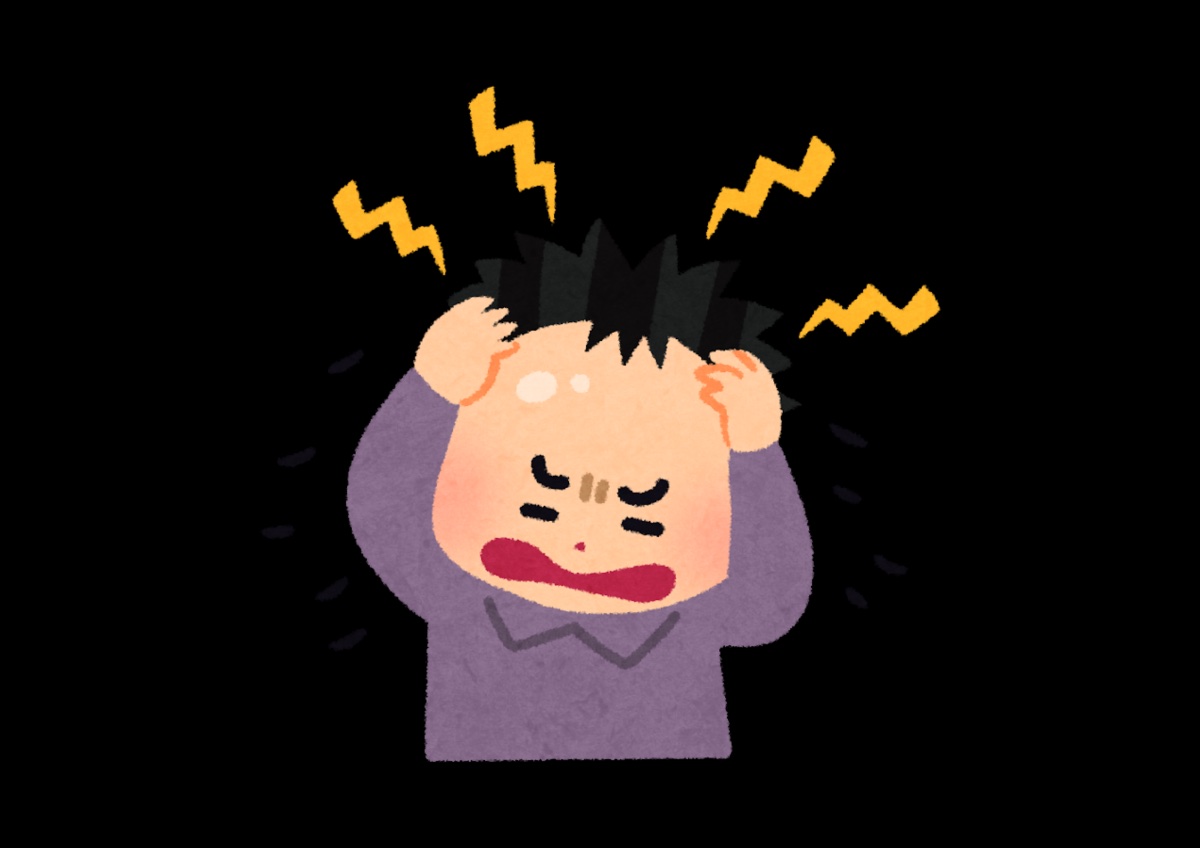
When you're anxious, a thought doesn't stay put: it runs ahead, hunts for the worst version and gets louder with every loop. Writing it down slows that loop — but not every kind of writing calms you. Some of it just moves the same spin onto paper. Here you get three formats built for anxious thinking (worry time, a thought record and a bedtime brain dump), a look at when journaling backfires, and why the most powerful step is reading back: which of your predictions actually came true.
What happens to your thoughts when you're anxious
An anxious thought has a typical shape: a prediction about the future. Not “I'm having a bad day”, but “tomorrow I'll mess up the presentation and everyone will see it”. Your mind isn't really thinking at that point; it's producing scenarios — and replaying the worst one.
Three things tend to come together. The thought repeats: the same sentence runs ten times because it never reaches an end. It magnifies: the unlikely feels certain. And it blurs: the deadline, your health and your relationship merge into one tight knot where you can no longer tell what comes from where.
Writing works against all three. On paper a thought has a first and a last sentence, so it has an end. A written prediction can be read from the outside, and by the third line you often notice the second was an exaggeration. And the knot comes apart: three separate worries, each with its own weight.
Research on putting feelings into words — the brain-imaging studies by Matthew Lieberman and colleagues — found that naming an emotion precisely reduces activity in the amygdala, one of the brain's alarm areas. Research on expressive writing (James Pennebaker and colleagues) found that writing about an unsettling experience improves many people's wellbeing, though the effect is modest and doesn't show up for everyone. For the broader picture, see the benefits of journaling.
With anxiety, though, there's a trap most “just write it out” advice skips: an anxious mind can use writing to worry, too. That's why the format matters. Each of the three formats below gives you a frame — time, structure or closure — and that frame is the point.
Format one: worry time
Worry time is a well-known element of cognitive behavioural therapy (CBT). The idea sounds odd: you don't try to stop worrying, you give it an appointment. Once a day, at a fixed time, you're allowed to worry for 15–20 minutes — the rest of the day you just note the worry down and postpone it.
Why can it work? Because an anxious thought feels urgent: “I have to think this through right now”. If you know it will get its own time and place, it's easier to let the moment go. Many people notice that by the time the slot arrives, some of the worries they wrote down in the morning no longer seem important.
- Pick a time. Always the same, ideally in the afternoon or early evening — not right before bed. For example, 5:30 pm, after your commute.
- During the day, just jot it down. When a worry comes up, write a word or half a sentence (“Mum's test results”, “Thursday's meeting”) and tell yourself: I'll deal with this at 5:30. Then go back to what you were doing.
- At the set time, take out the list. For each item, ask: does this still worry me now? If not, cross it out.
- Sort into two piles. For what you can change, write one concrete next step (“call the doctor on Monday”). For what you can't, write down what's going on inside you — but only until time is up.
- Close it. When the 15–20 minutes are over, you stop. If there's more, you continue tomorrow at the same time. Closing is as important as writing.
The first few days will feel strange, and postponing often won't work. That's normal: postponing is a skill, and it gets easier with practice. If a worry comes back during the day, you don't have to fight it — just write it down again.
Format two: the thought record
The thought record comes from Aaron Beck's cognitive therapy and is one of the core tools of CBT. It isn't about “thinking positive”; it's about checking your thought as if it were a claim, not a fact.
Five columns — or five lines one under another, if that's easier:
- Situation. What happened, briefly and factually. “My manager didn't reply to my email from this morning.”
- Thought. What went through your head, word for word. “What I sent must have been bad. She's annoyed with me.” Next to it, a number from 0–100: how much do you believe it?
- Feeling. One or two words, as precise as possible, with an intensity from 0–100. “Anxiety 70, shame 40.”
- Evidence. What supports the thought, and what goes against it? Facts only, not feelings. For: “she corrected something last week”. Against: “she's in meetings all day; she often replies in the evening; my last review was good”.
- More balanced thought. Not the opposite, just more accurate. “I don't know what she thinks. More likely she hasn't read it yet. If there's no reply by noon tomorrow, I'll ask.” Then the numbers again: how much do you believe the original thought now, and how strong is the feeling?
The numbers aren't decoration. If your anxiety drops from 70 to 45, that's a success — it doesn't need to hit zero. Many people get stuck exactly here, expecting to feel good after the balanced thought. You don't have to. It's enough to believe the worst version a little less.
A thought record is strongest with thoughts that keep coming back. After a while you'll recognise your own “favourite” distortions — maybe you always mind-read (“she's annoyed with me”) or always jump to catastrophe (“this will end badly”). More on this in managing negative thoughts.
In short
- An anxious thought is usually a prediction: it repeats, magnifies and blurs.
- Worry time: 15–20 minutes at a fixed time each day; the rest of the day you just note and postpone.
- Thought record: situation – thought – feeling – evidence – more balanced thought, with numbers before and after.
- Bedtime brain dump: short, about tomorrow's tasks and open loops — not a long worry session in bed.
- Writing can backfire: when you repeat the same thing, or check for reassurance.
- The most powerful step is reading back: which predictions came true.
Format three: writing it out before bed
For many people anxiety is loudest at night. During the day work keeps you busy; once you lie down it's quiet, and your mind pulls out the open loops. The bedtime brain dump exists so that those open loops get their space somewhere other than your bed.
It's not the same as worry time. The bedtime version is short — five to ten minutes — and it doesn't process, it puts down. In one sleep study, people who wrote a to-do list for the coming days before bed fell asleep faster than those who wrote about tasks they'd already completed. That's one study, not a law of nature, but it fits what many people notice themselves: an open loop rattles less once it's written down.
A simple evening format in three parts:
- What's waiting tomorrow: the task list, concretely. Not “the project”, but “send the second draft by 10”.
- What's still open: a sentence or two about what's still on your mind. Next to it: when will I deal with it? (“Tomorrow, in worry time.”)
- One closing sentence: “That's it for today. I'm putting this down now.” It sounds a bit contrived, but the closing line signals to your mind that the list is done.
What doesn't belong at your bedside: long, emotional writing about a hard topic. Right after expressive writing many people feel worse, and the improvement comes later — not something to try just before sleep. If your thoughts regularly keep you awake, a sleep diary helps you see what's connected to what.
When writing backfires: rumination on paper and checking
Journaling doesn't always calm you down. In two situations it can actually make things worse, and both are worth recognising.
Rumination on paper. If you write the same worry every night, in the same words, and end up where you started — or worse — that isn't processing; it's the loop in your head, written down. In expressive writing research, too, what helped was when the story changed: a new angle, cause and effect, insight appeared. Not when it repeated. A good test: can I write something new about this today that wasn't there yesterday? If not, switch formats — the frame of a thought record or worry time helps a lot — or put it down for the day. For thoughts that go round and round, see how to stop overthinking.
Checking. For some people the journal becomes a reassurance ritual: you have to write down that “I definitely locked the door”, read back that “I really didn't say anything wrong”, go through the list once more. At that point writing doesn't calm the anxiety, it keeps it going — brief relief, followed by an even stronger urge. If you notice you can't settle without writing, or you check the same thing again and again, that's not a journaling question, and it's worth talking to a professional.
A good journal entry is one after which you can move on a little. Not one after which you need to write another.
Reading back: which predictions came true
This is the step almost nobody does, yet with anxiety it may give the most. An anxious thought is a prediction — and predictions can be checked afterwards.
The method is simple: a prediction log. When you write down a worry, add one sentence on what you predict and when you'll know. “They'll criticise me for the delay at Thursday's meeting. I'll know: Thursday afternoon.” After that date you come back and add: what actually happened?
- Prediction. One concrete sentence: what will happen? Not “it'll be bad”, but “they'll tell me off”.
- Date. When will you know? If you never will, that's data too: this worry isn't a prediction but general uncertainty.
- What happened. After the date, one factual sentence. “I got one question about the delay, I explained, we moved on.”
- If it came true, how bad was it? If the prediction was partly right: was it survivable? Could you handle it?
- Monthly review. After a month, read all your predictions in one go. How many came true the way you expected? How many partly? How many not at all?
Most people are surprised. Not necessarily because nothing came true — sometimes it does, and there's no need to sugar-coat that — but because even the predictions that came true were far more manageable than they looked beforehand. That second lesson matters as much as the first: anxiety doesn't just overestimate the likelihood, it also underestimates how well you'll cope.
Reading back is powerful because it's your own data. It isn't someone else saying “it'll be fine” — your journal shows what happened the last twenty times. For pattern-spotting in general, see AI pattern recognition.
How to start: the first two weeks
You don't need to introduce all three formats at once. This order works well:
- Days 1–3: just observe. Each evening, one number from 0–10: how strong was the anxiety today? And one sentence: what was the biggest worry? This is your baseline.
- Days 4–7: worry time. Set a fixed slot and only jot things down during the day. In the slot, work through the list and add a prediction and a date to each worry.
- Days 8–11: one thought record a day. About the most anxious moment of the day, with the five lines and the numbers. It doesn't have to be long.
- Days 12–14: add the bedtime dump. If your anxiety shows up at night, add the five-minute evening put-down. If not, skip this step.
- Day 15: the first read-back. Look at your predictions: what became of them? And the daily numbers: after which format was the next day lower? The format that's yours is the one that helped and that you actually did.
If you miss a day, don't make it up. The goal isn't a perfect streak; it's having something to read back in two weeks.
Where the line is — when to see a professional
Journaling is a self-help tool for everyday worry and tension. It doesn't diagnose and it doesn't treat. Sometimes it isn't enough, and sometimes it isn't the first step.
- Panic attacks. If you have sudden, intense attacks — pounding heart, shortness of breath, dizziness, fear of dying — see a doctor first to rule out physical causes. If it is panic, it's very treatable, but with professional help.
- Persistent worry about almost everything. If you've been worrying about nearly everything for months and it's affecting your sleep, work or relationships, talk to your GP or a psychologist. Whether it's an anxiety disorder is something only a professional can assess.
- Compulsive thoughts or behaviours. If repetitive, intrusive thoughts and checking take up part of your day, that's not a journaling topic. A journal can even keep the loop going.
- If writing regularly leaves you feeling worse, and that hasn't changed after two or three weeks, don't force it.
If you do see a professional, your journal helps there too: you can say more precisely what happened, when and how intensely. For what's worth bringing along, see what to bring to therapy.
And separately: if you find yourself not wanting to live, or wanting to hurt yourself, don't open your journal — get help right away: call your local crisis line or emergency number (112 in the EU, 988 in the US and Canada), or someone you can call. That comes before everything else.
Where a system helps
An anxiety journal usually stalls at two points. First, worries and predictions end up scattered across sticky notes, a notes app and the back of a notebook, so when the date arrives there's nothing to check. Second, the monthly read-back never happens, because nobody scrolls through thirty entries in one evening.
In Mirrify, your journal, morning and evening reflection, one-tap mood tracking and voice journal live in one place, dated. So your evening number, your thought records and your predictions stay side by side, and in Pro the AI mentor shows you what repeats in your own entries — for example, at what time of day or after which situations your anxiety is stronger. If writing is hard for you, the voice journal lowers the bar: you say it, and it's kept just the same. Pro is free to try for 14 days, roughly the length of the two weeks above.
What it doesn't do: it doesn't diagnose, doesn't treat, and isn't therapy. It won't tell you whether you have an anxiety disorder, and it doesn't replace a professional. What it gives you is a way to read your predictions back.
The one sentence worth taking away
If you take away just one thing: an anxious thought is a prediction, and a prediction can be written down, dated and checked. It isn't the writing itself that calms you, but the frame — time, structure, closure — and reading it back afterwards.
If you do just one thing now: write your biggest current worry in one sentence, and next to it, when you'll know. Then set it aside until then.
Frequently asked questions
Does journaling help with anxiety?
For many people it does, with everyday worry and tension. A written thought has an end, can be read from the outside and can be taken apart — which slows the loop in your head. The effect depends on the format: worry time, a thought record and a short bedtime brain dump give you a frame, while aimless, repetitive writing can turn into rumination. Journaling isn't treatment, just a self-help tool.
What is worry time?
A well-known element of cognitive behavioural therapy: once a day, at a fixed time, you give worrying 15–20 minutes, and the rest of the day you just note worries down and postpone them. In the slot you go through the list, cross out what no longer worries you, and write a next step for what you can change. It's best not to schedule it right before bed.
How do you fill in a thought record?
In five lines: situation (what happened, factually), thought (what went through your head and how much you believe it, 0–100), feeling (one or two precise words and an intensity), evidence (facts for and against the thought) and finally a more balanced thought. At the end you rate the belief and the feeling again. It doesn't need to drop to zero — any decrease counts.
Is it a good idea to write down your thoughts before bed?
Briefly, yes; at length, probably not. Five to ten minutes on tomorrow's tasks and your open loops, with a closing sentence, helps many people put the day down. Long, emotional writing about a hard topic can stir you up in the short term, so it's better done during the day or early evening.
Can journaling make anxiety worse?
Yes, in two cases. If you write the same worry every day without it changing, that's rumination on paper and it can keep anxiety going. And if journaling becomes a checking ritual — you have to write it down or read it back to calm down — it can strengthen a compulsive loop. If so, switch formats or talk to a professional.
How long does it take for an anxiety journal to help?
A bedtime put-down or a thought record can ease things a little the same day. Worry time takes a few days of practice, because postponing is a skill. Reading back your predictions shows the most after two to four weeks, once there's something to compare. Give it at least two weeks before you judge.
When should I see a professional about anxiety?
If you have panic attacks, if you've been worrying about almost everything for months and it's getting in the way of your sleep, work or relationships, if compulsive thoughts or checking take up your day, or if writing regularly leaves you feeling worse. Journaling is at most a complement then. If you don't want to live or might hurt yourself, get help immediately: a crisis line, your emergency number (112 in the EU, 988 in the US and Canada), or someone you can call.
Mirrify
Turn reading into practice
Mirrify brings your journal, habits, goals and an AI mentor that works from your own data into one place.
- Journal, morning and evening reflection, habits, goals and to-dos — in one system.
- An AI mentor that remembers your earlier entries and shows you your patterns.
- Write with no connection: it syncs as soon as you are back online.
Related from the knowledge base
 Self-knowledgeMood tracking: what your mood reveals about youSpotting anxiety's patterns.15 min→
 Self-knowledgeSchema therapy at home: rewrite your recurring patternsReframing your fears.8 min→
 Self-knowledgeSocial anxietyNot shyness, and not temperament.11 min read→
 Self-knowledgeThe Sunday scariesIt isn’t necessarily the job.12 min read→