Knowledge base › Self-knowledge
Always tired: the four kinds of tiredness, and why going to bed earlier doesn’t help
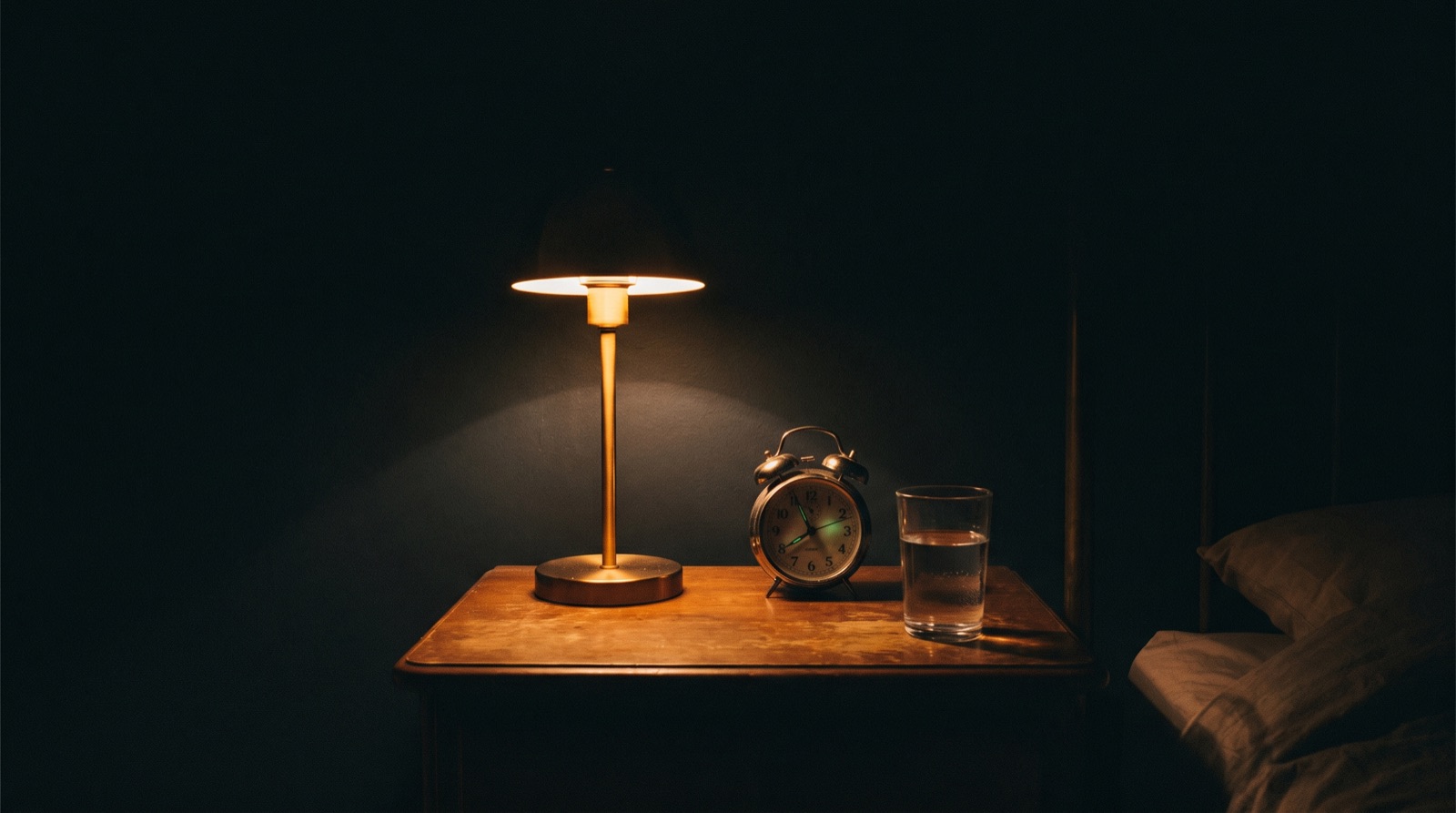
There’s a sentence a great many people say, and almost everyone misreads it — including the person saying it: I’m always tired. The misreading isn’t that it’s untrue. It’s that the word “tired” covers at least four different states, and each one calls for something DIFFERENT. Most people do the same thing for all four — go to bed earlier — and that’s why nothing improves.
First, the question that settles everything: sleepy or exhausted?
Let’s start with a distinction that’s rarely made, though it’s the most important one. We use the same word for two very different states.
Sleepy is someone who would fall asleep if they sat down. If you closed your eyes right now in a quiet room, you’d be asleep within five minutes. Exhausted is someone who can’t fall asleep but has no strength for anything: the body is tense, the mind races, wide awake in bed at night and dragging themselves through the day.
The two call for almost opposite responses. The sleepy person really does need sleep — more of it, or better. For the exhausted person, going to bed earlier typically doesn’t help; in fact they lie awake longer and start the morning worse. This is the point where most well-meant advice goes wrong.

The four kinds of tiredness
From here four directions open up. All four are real, all four are common, and each has its own measurement.
- 1. Sleep debt — the quantity. Simply not enough sleep, for days or weeks. The sign: at the weekend you sleep two or three hours longer, and it genuinely helps. This is the rarest case among people searching for this article — because whoever is living it usually knows.
- 2. Poor quality or bad timing — the rhythm. The hours are fine, but sleep is fragmented, late, or at a different time every day. The sign: you wake up wrecked even after eight hours. Our sleep diary article covers this, with a two-week measurement.
- 3. Energy balance — the daytime. Sleep is good, yet by the afternoon you’re empty. Here it isn’t the recharging that’s short, it’s the draining that’s heavy — and typically not from what you’d expect. That’s what the energy map is for: one week, three entries a day.
- 4. What isn’t a sleep question. Sustained load (see burnout), mood-related causes, cyclical fluctuation — or a physical cause a test would show. This is the direction people postpone most often, though it’s frequently the easiest one to check.
The quick test
Ask yourself: if you slept nine hours tomorrow, would it be better? If the answer is a clear yes, you have a sleep question (1 or 2). If it’s “I’ve tried, it didn’t help”, then it isn’t there — and that’s why going to bed earlier hasn’t worked so far.
Why going to bed earlier doesn’t help
This is the most common first move, and with the third and fourth types it makes things worse. Someone who isn’t sleepy but exhausted doesn’t fall asleep sooner by going to bed earlier — they just lie awake longer.
And that has an unpleasant side effect: your mind starts to associate the bed with being awake and with racing thoughts. After a few weeks you aren’t only tired, you’re anxious about falling asleep — and that is a separate problem with a life of its own.
The correct order is the reverse: first find out which type is yours, and only then change anything. Two weeks of measuring is cheaper than six months of guessing.
In brief
- The word “tired” covers four different states — and each one calls for something different.
- The decisive question: sleepy or exhausted? Would you fall asleep if you sat down now?
- For the exhausted, an earlier bedtime doesn’t help: longer awake in bed, and the bed becomes linked with racing thoughts.
- Two weeks, three data points a day — and it becomes clear which direction to search in.
- The fourth direction (a physical cause) is the most postponed, though often the easiest to check.
The measurement: two weeks, three data points a day
You don’t have to run all four measurements. One shared, two-minute note is enough to tell you which way to go next.
- Morning, a number from zero to ten: how RESTED you woke up. Not how much you slept — how you WOKE. The two are often not the same, and the difference is exactly the information.
- Afternoon, a number: where your energy is. Same scale, at roughly the same hour. The DEPTH and the TIME of the afternoon dip are the most revealing data in the whole thing.
- Evening, one word about what took the day. Not a sentence: one word. “Meetings”, “child”, “nothing”, “travel”. In two weeks these words will start repeating.
If you have the appetite for a fourth, make it hours of sleep — because that separates the first two types from the other two.

What you’ll see after two weeks
The patterns usually emerge very cleanly — and for most people, surprisingly.
- If the morning number is low but the afternoon one is high: you have a sleep question (1 or 2). From there the sleep diary is the next step.
- If the morning number is fine and you crash by the afternoon: the daytime is taking it — energy balance. The energy map is the next step.
- If BOTH numbers stay low, weekends included: this is the fourth direction. Measuring isn’t enough here; see the boundary below.
- If the evening word is the same on five days out of seven: you’ve found the drain, and you don’t need further measurement — only a decision.

What not to do
Three reflexes come by themselves, and all three hide the answer.
- Don’t increase the caffeine. It works short term, and that’s exactly what turns it into measurement noise: it masks the afternoon dip, which is precisely the signal you’re measuring for. If you can, keep it unchanged for the two weeks.
- Don’t make four changes at once. Earlier bedtime, exercise, diet and a screen ban together: if it gets better you won’t know from what, and if it doesn’t, you won’t either.
- Don’t postpone the physical check-up with “it’s probably just stress”. This is the most common postponement, and the most expensive. A blood test is one morning; guessing is months.

Where the line is — when journalling isn’t the answer
It would be dishonest to leave this out. This article is about a method of observation, not medical advice, and it isn’t suitable for identifying or ruling out any condition.
Sometimes the next step isn’t measurement but a doctor. That’s the case if the tiredness has lasted for weeks and doesn’t improve with rest; if other symptoms come with it (weight loss, fever, persistent pain, breathlessness, loud snoring or pauses in breathing during sleep); if it started suddenly; or if it dates from a change of medication.
The reason is very prosaic: a significant share of the causes behind lasting tiredness can be checked with a simple test — which is exactly why it’s a shame to spend months guessing. Your log is useful there too: you can show concrete data instead of an estimate, and that counts for a lot in a ten-minute appointment.
And if the tiredness comes with persistently low mood, loss of pleasure or hopelessness, that isn’t “just tiredness” either. Our article on the line between an AI mentor and therapy is honest about this.
Where a system helps
The difficulty here is that the three data points say nothing on their own — only next to each other, over two weeks. On paper this works fine, except the sheet is lost within two days.
That’s why Mirrify keeps the daily mood, energy and entry in one place, and why two months on you can look back at them together. The AI mentor works from the same material: it shows the recurring patterns in your own words — for instance that the one evening word is the same on five days out of seven.
What it doesn’t do: it determines nothing, it isn’t a medical device, and it won’t tell you which type is yours. The three daily numbers are yours to enter — the system only helps in that two weeks from now there’s something to set side by side.

The one sentence worth taking away
If you take one thing from all this, let it be: tiredness isn’t one thing but four — and until you know which is yours, every intervention is guesswork. Two weeks of measuring is cheaper than six months of earlier bedtimes.
And if you can do only one thing right now: answer yourself honestly whether you’d fall asleep if you sat down in a quiet room now. That single question cuts the four directions in half.
Frequently asked questions
Why am I always tired even though I sleep enough?
Because the word “tired” covers at least four different states. If the hours are fine, then either the QUALITY or the TIMING of your sleep is off (fragmented, late, different every day), or sleep isn’t the problem at all but your daytime energy balance — possibly sustained load or a physical cause. Each of the four has its own measurement and its own answer.
What’s the difference between sleepy and exhausted?
Sleepy is someone who would fall asleep if they sat down in a quiet room right now. Exhausted is someone who can’t fall asleep but has no strength for anything: the body tense, the mind racing. The two call for almost opposite responses — and that’s exactly where most well-meant advice goes wrong.
Why doesn’t going to bed earlier help?
If you’re exhausted rather than sleepy, an earlier bedtime doesn’t bring earlier sleep — only longer lying awake. And that has a side effect: your mind starts linking the bed with wakefulness and racing thoughts, and within weeks you’re anxious about falling asleep too. The correct order is the reverse: first find out which type is yours.
What should I measure to find the cause?
Three data points for two weeks, two minutes a day: in the morning a number from zero to ten for how RESTED you woke (not the hours); in the afternoon a number on the same scale at roughly the same hour; and in the evening one single word about what took the day. If you want a fourth, make it hours of sleep.
What does it mean if the morning number is bad but the afternoon one is fine?
It points towards sleep: either the quantity is short or the quality and timing are off. If instead you’re fine in the morning and crash by the afternoon, the daytime is taking it — look at the energy balance there. If both numbers stay low, weekends included, measuring alone isn’t enough.
What should I NOT do during the measurement?
Don’t increase the caffeine: it masks the afternoon dip, which is precisely the signal you’re measuring for. Don’t make four changes at once, because afterwards you won’t know what worked. And don’t postpone the physical check-up with “it’s probably just stress” — that’s the most common and the most expensive postponement.
When should I see a doctor?
If the tiredness has lasted for weeks and doesn’t improve with rest; if other symptoms come with it (weight loss, fever, persistent pain, breathlessness, loud snoring or pauses in breathing during sleep); if it started suddenly; or if it dates from a change of medication. This article is about a method of observation, not medical advice — but the log helps at the appointment too, because you can show concrete data instead of an estimate.
Mirrify
Turn reading into practice
Mirrify brings your journal, habits, goals and an AI mentor that works from your own data together in one place.
- Journal, morning and evening reflection, habits, goals and to-dos — in one system.
- An AI mentor that remembers your earlier entries and shows you your patterns.
- Write with no connection: it syncs as soon as you are back online.
Also worth reading in the knowledge base
 Self-knowledgeSleep diaryIf the measurement points towards sleep.12 min read→
 Self-knowledgeEnergy mapIf the daytime is what takes your energy.11 min read→
 Daily practiceThe signs of burnoutWhen sustained load is behind it.9 min→
 Daily practiceThe bad-day protocolWhen you just have to get through today.11 min read→
 Self-knowledge“I have no motivation”“I have no motivation” rarely means the wanting has run out of you.13 min read→
 Self-knowledgeIntrovert or extrovert? The test asks the wrong questionIt isn’t about liking people — it’s about where your energy comes back.12 min read→