Knowledge Base › Self-knowledge
Winter blues: when your mood fades with the daylight
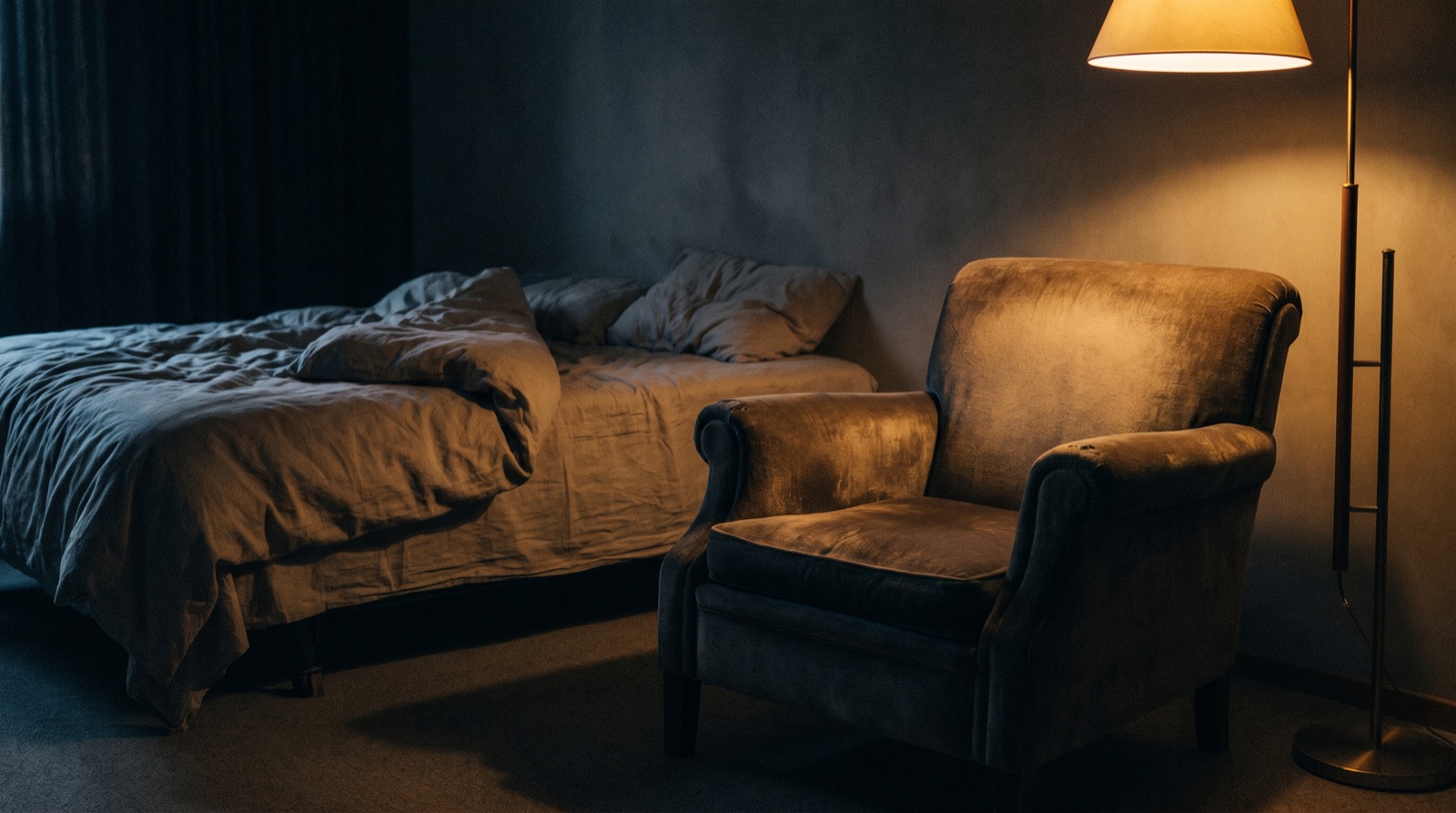
At the end of October the day changes overnight: after the clocks go back, the afternoon slips into darkness almost unnoticed, and many people find their mood goes with it. Getting up is harder, the sofa pulls more strongly, friends’ messages go unanswered. This article is about what the winter blues are, how they differ from seasonal depression, why the dark season drags you down — and what you can do so that winter is more than something to get through.
Why now?
In the European Union the clocks go back on Sunday 25 October 2026. On paper it’s only an hour, but in practice many people suddenly head home from work in the dark, and the morning light doesn’t last long either. The change isn’t gradual — it’s abrupt, and the body notices.
In the first few days after the change, sleep gets thrown off for many people: they feel sleepy earlier, wake up before dawn, or find it harder to get up. This usually settles on its own as the body clock adjusts. What stays is the short day: for weeks, months, there’s less light, and for many people that leaves a mark on their mood.
If you live somewhere without a clock change, shortening days can have the same effect — just more slowly, less noticeably. Our article on feeling “always tired” goes into the different kinds of tiredness in detail.
Winter blues or seasonal depression?
The two are not the same, and the difference matters. The winter blues are a common, milder dip in mood that arrives with the dark season and lifts in spring. Typical signs:
- Needing more sleep, harder mornings, a dull feeling during the day.
- Less interest in things that usually bring you joy.
- A bigger appetite, especially for carbohydrates and sweets.
- Withdrawing: fewer meet-ups, more evenings at home.
Seasonal affective disorder (seasonal depression), on the other hand, is a clinical diagnosis: a depressive period that returns year after year and significantly affects daily functioning. Only a professional — a doctor, psychiatrist or psychologist — can diagnose it. This article doesn’t diagnose, and couldn’t: it’s about what you can do day to day, and when it’s worth asking for help.
The line isn’t always sharp. If you can’t tell where you are, the fact that you’re paying attention to yourself is already a good sign. At the end of the article we’ve gathered the signs that mean you shouldn’t wait.
Why does the dark season drag you down?
The exact causes vary from person to person, and research hasn’t settled the question. What we can cautiously say is that several factors act at once, and they reinforce each other.
- Less daylight. Light is one of the body clock’s most important signals. When there’s less of it — especially in the morning — the body has a harder time knowing when it’s “day”.
- The body clock drifts. The circadian rhythm, which regulates sleep, alertness and energy, shifts later or flattens out for many people in the darker months.
- Sleep changes. We sleep more and still don’t feel rested; or we stay up in front of a screen because in the evening it’s “not that late yet”.
- Less movement. It’s cold, it’s dark, you don’t feel like going out — and the lack of movement itself drains your energy.
- Fewer people. Meet-ups thin out, and withdrawing easily becomes a self-reinforcing loop.
This isn’t a character flaw or laziness. The body is simply trying to adapt to a changed environment — it’s just that modern life doesn’t let us switch into winter mode.
What helps: light, rhythm, movement, people
There’s no single miracle cure, but a few simple habits make a noticeable difference to the winter months for many people. You don’t have to introduce them all at once — starting with one or two is worthwhile.
- Morning light outdoors. Go outside in the morning, as soon as you can after waking — even if it’s cloudy. Outdoor light on an overcast day is still far stronger than indoor lamps. A short walk, walking to the shop, a few minutes before the bus all count.
- A regular wake time. Get up at roughly the same time every day, weekends included. That’s what the body clock can set itself by. A morning routine that gives you a reason to get up helps here.
- Movement during the day. No gym required: a walk at lunchtime, the stairs instead of the lift, ten minutes of stretching. If starting is hard, the principle of small steps works here too.
- Stay in touch. A call, a dinner together, a walk with someone. Our article on loneliness helps if withdrawing has become a little too comfortable.
- Plan small good things. Something to look forward to in the middle of the week, too: a book, cooking something, a film with someone. Winter is easier when you’re not just trying to get through it.
- Evening light and screens. Dim the lights in the evening and put your phone down earlier. Our article on the evening routine walks you through this step by step.
If your sleep has been falling apart for weeks, it’s worth keeping a sleep diary for two weeks: it often reveals what’s really ruining your nights.

Winter won’t get any shorter. But you can put more light, more movement and more people into your day — and that’s often enough to do more than just get through it.
Light therapy and vitamin D — with care
Light therapy — time spent in front of a strong, special lamp, usually in the morning — is an established method that’s in use, particularly in treating seasonal depression. Even so, it’s not something to start on your own: talk it through with a doctor, especially if you have an eye condition, if you’ve ever been diagnosed with bipolar disorder, or if you take medication that can cause sensitivity to light. Which lamp, for how long and when are also things to decide with them.
You can read a lot about vitamin D in winter. Whether you need it, and how much, isn’t something an article can decide: ask for a blood test and talk it over with your doctor. If it turns out you’re low, they can tell you what’s worth doing.
Two weeks of “light and rhythm” — a mini-plan
If you don’t know where to start, try these two weeks. Each step lasts two days and builds on the one before — by the end you’ll have a whole daily rhythm, not one big resolution.
- Days 1–2: Pick a wake-up time and stick to it — weekends too, within half an hour.
- Days 3–4: Within an hour of waking, go outside for at least a few minutes, whatever the weather.
- Days 5–6: Add a short walk during the day, ideally while it’s light.
- Days 7–8: Message someone you haven’t talked to in a while, and arrange to meet.
- Days 9–10: An hour before bed, dim the lights and put your phone down.
- Days 11–12: Plan one small good thing into your week that you can look forward to.
- Days 13–14: Look back over the two weeks: what helped, what didn’t? Keep what worked.
It’s fine if you miss a day. The goal isn’t a perfect two weeks; it’s finding out what helps you. Our article on habit building goes further into making habits last.
Watch which way your mood moves
In winter it’s easy to blame everything on the dark — and just as easy to overlook what really is down to the dark. If for a few weeks you note your mood every day, with a short sentence about what happened that day, you’ll see much more clearly: does the low mood really track the short days, or is it more about work, a relationship, your sleep? Our article on mood tracking shows you how to go about it.
This isn’t a diagnosis but an observation — yet if you later see a professional, notes like these help a lot. Our article on preparing for therapy explains how to use them.

When to ask for help
The winter blues are unpleasant, but usually something you can live with. There are signs, though, where you shouldn’t wait for spring but should see a doctor or psychologist:
- The low mood has lasted for weeks and isn’t easing.
- It’s affecting your daily functioning: work, study, your relationships, basic tasks.
- You feel hopeless, or as if nothing has any point.
- Your sleep or appetite has changed a lot.
- Thoughts of self-harm or of death come up.
Asking for help isn’t a failure, and you don’t need a “big enough” problem for it. If stress is adding to your winter tiredness, our article on stress management can give you something to hold on to in the meantime.
If it’s very hard
If you feel you can’t go on, or thoughts of self-harm are on your mind, don’t stay alone with it. Tell someone you trust, and call your local crisis line or the emergency number.
In short
- The clock change can throw off your sleep for a few days; the short days, though, affect mood for months.
- The winter blues are common and milder; seasonal depression is a clinical diagnosis that only a professional can make.
- What helps: morning light outdoors, a regular wake time, movement, people, small good things and dimmer evening lights.
- Talk to a doctor about light therapy and vitamin D before you start.
- If it has lasted for weeks, is affecting your days, or you feel hopeless, ask for help — don’t wait for spring.
Where Mirrify helps
With Mirrify’s mood tracking you can record how you feel every day with a single tap. Keep it up for a few weeks and you’ll see whether the dip really goes along with the dark season or with something else — and what happened before the better days.
With the habit tracker you can keep an eye on your winter anchors: getting outside in the morning, the daily walk, movement, a regular wake time. The morning and evening reflection gives a frame to the start and end of the day, and in the free journal you write whatever you like.
What it doesn’t do: it doesn’t diagnose, it doesn’t detect depression, it doesn’t provide light therapy, and it isn’t therapy. It doesn’t track the weather or sunlight either. It’s a tool for seeing yourself more clearly — and if you see a professional, you can take your notes with you.
The one sentence worth taking with you
If you take only one thing from all this, let it be this: the dark season isn’t your fault, but how much light your day holds is partly up to you. A morning walk, a steady wake time, a call to someone — small things that add up.
And if you only do one thing right now: tomorrow morning, after you wake up, go outside for a few minutes — even if the sky is grey. Then in the evening, write down in one sentence what your day was like.
Frequently asked questions
What’s the difference between the winter blues and winter depression?
The winter blues are a common, milder dip in mood: needing more sleep, less interest, a bigger appetite, withdrawing — and they lift in spring. Seasonal depression (seasonal affective disorder) is a clinical diagnosis: a depressive period that returns year after year and significantly affects daily functioning. Only a professional can diagnose it; if you’re unsure, see a doctor or psychologist.
Why am I tired after the clocks go back?
After the clock change, your body clock and social time are out of step for a few days: many people feel sleepy earlier, wake before dawn, or find it harder to get up. This usually settles within a few days. It helps to get up at a regular time and to go out into natural light as soon as you can after waking.
What can I do about the autumn and winter blues?
Go outside in the morning, even when it’s cloudy; get up at roughly the same time every day; move during the day; stay in touch with others; plan small good things; and in the evening dim the lights and put your phone down earlier. You don’t have to introduce everything at once — starting with one or two habits is worthwhile.
Does light therapy work?
Light therapy is an established method that’s in use, particularly in treating seasonal depression. But don’t start it on your own: talk it through with a doctor, especially if you have an eye condition, if you’ve been diagnosed with bipolar disorder, or if you take medication that can cause sensitivity to light. The type of lamp, how long and when are also worth deciding with them.
Should I take vitamin D in winter?
That’s not something to decide based on an article. Ask for a blood test and talk it over with your doctor: whether you need it and, if so, how much. They can also take your other health factors into account.
When should I see a professional about low mood in winter?
If the low mood has lasted for weeks and isn’t easing, if it’s affecting your work, your relationships or basic tasks, if you feel hopeless, if your sleep or appetite has changed a lot, or if thoughts of self-harm come up. Don’t wait for spring then. If you feel you can’t go on, call your local crisis line or the emergency number.
Does mood tracking help with the winter blues?
It doesn’t cure or diagnose anything, but it reveals a lot. If you note your mood, your sleep and whether you got outside every day for a few weeks, it becomes visible whether the dip really goes along with the dark season or with something else — and what helps you. If you see a professional, you can take your notes with you.
Mirrify
Turn reading into practice
Mirrify brings your journal, habits, goals and an AI mentor that works from your own data into one place.
- Journal, morning and evening reflection, habits, goals and to-dos — in one system.
- An AI mentor that remembers your earlier entries and shows you your patterns.
- Write with no connection: it syncs as soon as you are back online.
Also worth reading from the Knowledge Base
 Self-knowledgeAlways tired: the four kinds of tiredness, and why going to bed earlier doesn’t helpIf the tiredness isn’t only about the dark.12 min read→
 Self-knowledgeMood tracking: what your mood reveals about youHow to see which way your mood moves.15 min→
 Daily practiceEvening routine: close your day and sleep deeperDimmer lights, calmer evenings.7 min→
 Self-knowledgeSleep diary: two weeks that show what actually ruins your sleepIf winter has taken your nights too.12 min read→
 Self-knowledgeYour cycle and your moodSome of your bad days aren’t random, and aren’t caused by events either.12 min read→
 Self-knowledgeEnergy mapYour schedule tells you where the day went — not why you are empty in the…11 min read→