Knowledge base › Daily practice
How to Stop Procrastinating: Find the Feeling Behind the Task
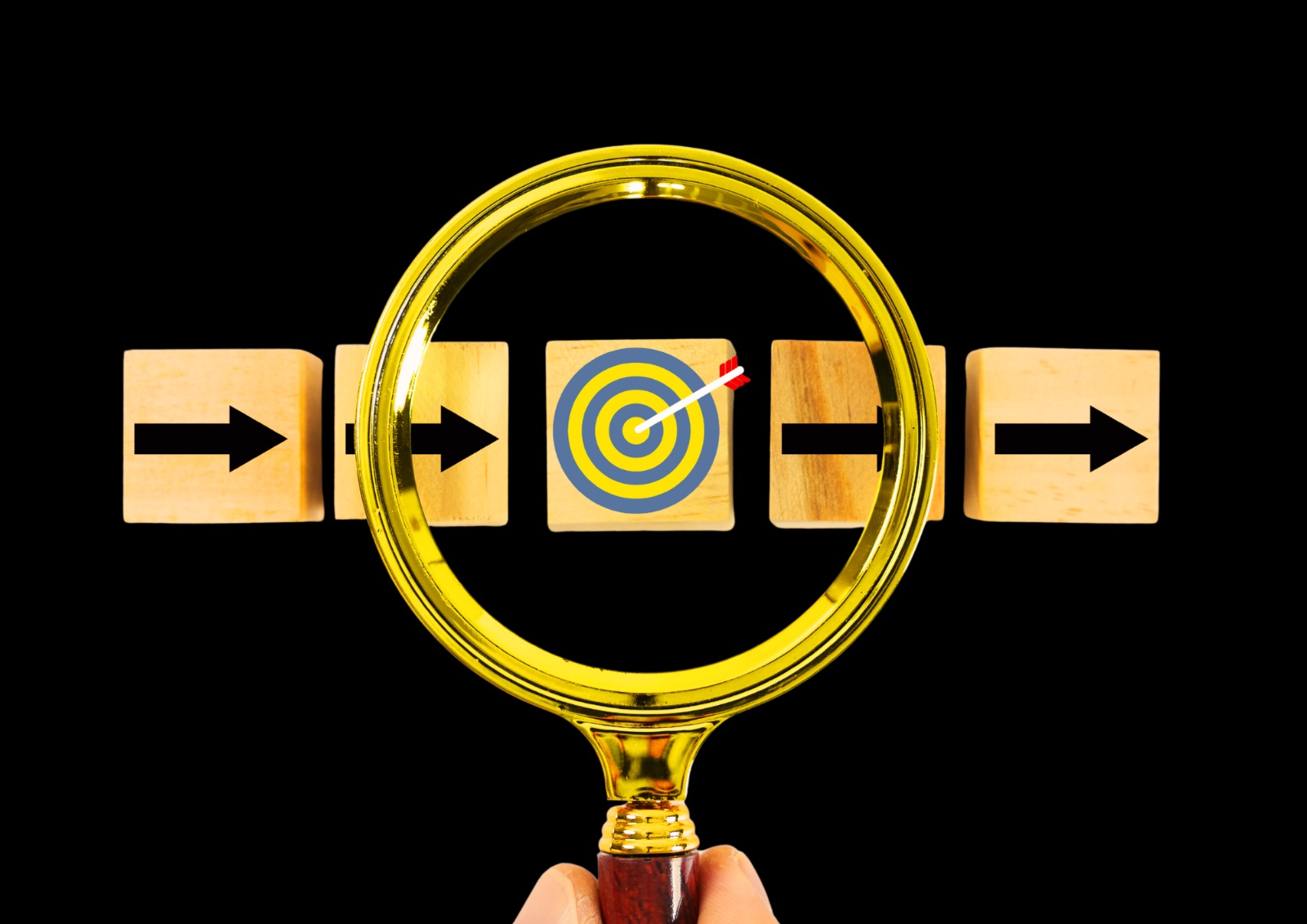
Most advice on procrastination treats it as a scheduling problem or a lack of willpower: a better list, a stricter deadline, more discipline. But people who procrastinate usually know exactly what they should be doing, and they often have the time. What's missing isn't the plan — it's a way to make the first minute of the task stop hurting. Researchers describe procrastination as the short-term avoidance of an unpleasant feeling. So instead of yet another list of hacks, you get a pairing: which feeling sits behind the task, and which tool fits it — plus a one-week procrastination log that shows which feeling is yours.
Procrastination isn't laziness — it's avoiding a feeling
A lazy person does nothing and isn't bothered by it. Someone who procrastinates is usually very busy — cleaning the kitchen, answering six emails that could have waited, reading an article about procrastination — and the whole time it nags at them that the real thing hasn't moved. That isn't a lack of energy. It's a directed escape.
Fuschia Sirois and Timothy Pychyl, two well-known procrastination researchers, describe it as short-term mood repair. The moment you open the task, an unpleasant feeling shows up — boredom, uncertainty, anxiety — and avoiding the task lowers it instantly. The task stays; the feeling disappears for a few minutes. Your brain books that as a good deal.
Pychyl often makes the point that procrastination is not a time-management problem but an emotion-regulation problem. That's why another calendar or a prettier to-do list rarely fixes it for long: your schedule is usually fine. It's the first minute of the task that feels bad.
This isn't an excuse. It's a better target. If the problem is the feeling, you have to do something with the feeling — not with your character.

Why it gets stronger: the procrastination loop
Procrastination feeds itself in a loop. Once you can see it, it's harder to stay in it without noticing.
- You look at the task, and an unpleasant feeling appears.
- You avoid it: a new tab, your phone, a “quick” tidy-up. Instant relief.
- The relief rewards the avoidance. Next time you reach for the phone faster, because your body has learned that it works.
- Meanwhile the task has grown: less time, a closer deadline, and now guilt on top.
- Next time, it's not only the original feeling waiting for you at the task, but the guilt too. A bigger feeling, a stronger urge to avoid.
Another recurring idea in procrastination research is the “future self”. Today, your present self decides; tomorrow, your future self pays — and somehow that future self always looks more rested, more motivated, braver. Almost like a different person you can safely hand things to. Then tomorrow arrives, and it turns out to be the same person, with the same feeling.
Procrastination doesn't protect you from the task. It protects you from the feeling of its first five minutes.
Which feeling sits behind the task?
The same behaviour — putting it off — can come from four very different feelings. And this is the point: “just start” works for one of them and makes another one worse.
- Boredom. The task is simple, just empty: sorting invoices, admin, the same spreadsheet as last month. There's no risk, only time that feels endless. The sign: you know exactly what to do; you just have zero desire to do it.
- Uncertainty. You don't know how to begin, what the first step is, who to ask, what a good result even looks like. The sign: you open it, stare at a blank screen, and catch yourself “researching” something.
- Fear of judgement. Someone will see the result: your boss, the client, a teacher, your family. The work isn't the hard part — what the result will say about you is. The sign: the more important the audience, the longer it slides. If this is yours, the perfectionism article goes deeper into the standard behind it.
- Too big. The task is a mountain: “thesis”, “the move”, “sort out my finances”. It's less a single feeling than a pressure with nothing to hold on to. The sign: the task's name has no verb in it, only a noun.
Sometimes two are mixed — uncertainty and fear of judgement often travel together. Start with whichever is stronger.
How to identify it in thirty seconds. Don't think about it; look. Open the task — the file, the email, the box — and notice the first feeling that arrives before your hand heads for your phone. Then name it in one word: boredom, uncertainty, fear, too big. Research by Matthew Lieberman and colleagues suggests that simply putting a feeling into words takes some of the edge off it. But here the practical use of the word matters even more: the word tells you which tool to reach for.
If no feeling comes, just a dull “later”, ask yourself: what would be most unpleasant about spending five minutes on this right now? The answer almost always reveals which of the four it is.
Four feelings, four methods
These aren't generic tips; they're pairings. The tool for boredom does nothing for fear, and vice versa.
If it's boredom: a closed time window and a little comfort. With boredom, starting isn't really the hard part — sticking with it is. Give the task a closed window — say, 25 minutes on a kitchen timer — and pair it with something pleasant: a favourite playlist, a good coffee, the comfortable chair, a corner in a café. The rule: that playlist is only for admin time. A boring task doesn't need to become fun. It just needs to be finite, with something good next to it.
If it's uncertainty: the next physical step. Uncertainty lives in your head, and more thinking doesn't dissolve it. Write down: what's the next thing your hands would actually do? Not “figure out what the presentation should look like”, but “open last year's deck and copy the first slide”. If even the next step is foggy, then the step is to write down the question you can't answer and send it to someone who can. Breaking tasks into physical moves is covered in depth in the task paralysis article; here it's enough to know that the answer to uncertainty is a movement, not more pondering.
If it's fear of judgement: a deliberately bad first draft. When this is the driver, every sentence you start is already an exam for the final version. You can defuse that by making the first round officially not count. Name the file “draft — nobody sees this”, write with mistakes, use bullet points instead of sentences, and decide in advance what the “good enough” version will look like before you start. Polishing is the second round's job. The fear doesn't vanish, but in a draft there's no one to judge.
If it's too big: the first two minutes. You don't have to climb the mountain, just touch it for two minutes. Commit to doing it for two minutes — often called the two-minute rule — and then you're free to stop. It's not a trick; two minutes genuinely counts as done. With a task that's too big, starting is the most expensive moment, and two minutes brings that price close to zero. If even two minutes feels impossible, it's no longer procrastination but paralysis, and the steps in the task paralysis article are the better fit.
If a method “doesn't work for you”
It may be a good method used on the wrong feeling. Two minutes does little for boredom: you start, then quit in minute three, because boredom lives in the middle, not at the start. A timer does little for fear of judgement: 25 minutes just becomes 25 minutes of not writing anything anyone could judge. Before you throw a tool away, check whether you used it on the right feeling.
In short
- Procrastination is short-term mood repair: you're not avoiding the task, you're avoiding the feeling of its first minutes.
- Four common feelings sit behind it: boredom, uncertainty, fear of judgement, a task that's too big.
- The pairing: a closed time window for boredom, the next physical step for uncertainty, a deliberately bad draft for fear, the first two minutes for too big.
- If–then plans work best when they're built on procrastination's own cue.
- After a slip, self-compassion: name it, remember you're not alone, pick the next step.
- One week of a procrastination log shows which feeling is yours.
If–then plans: so you don't have to decide in the moment
All four methods share one weak spot: the moment of decision. At 3 p.m., tired, phone in hand, you won't be working out whether this is boredom or fear. That needs to be decided in advance.
Peter Gollwitzer's research on implementation intentions shows that people who spell out in advance exactly when and where they'll act are more likely to follow through than people who only set the goal. The format is simple: if situation X happens, then I will do Y.
- “If I put my coffee down on the desk on Tuesday morning, then I open the invoices folder and work only on that for 25 minutes.” — boredom
- “If I catch myself searching for the same thing a third time, then I write down the question and send it to Sam.” — uncertainty
- “If I reach for my phone while writing the report, then I take it to another room and write one bad sentence.” — fear
- “If it's 8 p.m. on Sunday, then I spend two minutes on the moving list.” — too big
The second and third types are especially valuable: they're built not on a time, but on procrastination's own cue. Procrastination always has a first move — the phone, a new browser tab, opening the fridge. If you make that move your “if”, the escape itself triggers the return.
One more thing helps: knowing how much time you really have. Many people procrastinate calmly because they feel there's “loads of time left” — and that feeling is often wrong. If your deadlines keep collapsing on you, the time blindness article explains how to measure your real pace.
After a slip: self-compassion, not self-punishment
There will be days when you know all of this and still procrastinate. What happens next often matters more than the slip itself.
Most people are hard on themselves at this point: “again”, “this is just how I am”, “I'll never change”. It looks like taking responsibility, but in the loop, that guilt is exactly what makes the feeling bigger the next time you face the task. Harshness doesn't push you forward; it manufactures one more feeling to avoid.
In a Canadian university study (Wohl, Pychyl and Bennett), students who forgave themselves for procrastinating before their first exam procrastinated less before the next one. Sirois's work also points in the same direction: people who procrastinate tend to treat themselves with less self-compassion. Self-compassion isn't softness — it's how you break the loop.
It doesn't mean “no big deal, tomorrow”. It means three sentences, built on the three elements of Kristin Neff's model of self-compassion:
- Name it: “I put off the report today, and that feels bad.”
- Common humanity: “This happens to everyone who has something important and hard to do.”
- A kind next step: “Tomorrow at nine I'll look at it for two minutes.”
The third sentence matters most: not a promise to catch up on everything tomorrow, but a small, concrete point of return. If your inner voice is particularly harsh, the inner critic article looks at where that voice comes from and how to talk back to it differently.
The procrastination log: one week that shows your pattern
All of this stays theory until you know which feeling is the common one for you. That's what the procrastination log is for: seven days, one minute per entry, four fields.
- Write one line every time you procrastinate. Not later in the evening, but when your hand starts moving towards the phone, or half an hour later when you notice. One line, four fields: what I'm putting off · what I'm doing instead · which feeling (one word from the four) · how strong, from 1 to 10.
- Days 1–3: just observe. You don't have to procrastinate less, only write it down accurately. For many people it drops a bit just from that, but that's not the goal right now. The goal is data.
- Days 4–6: try the pairing. When you write down the feeling, use the matching tool and add a fifth field: did I start? — yes or no.
- One sentence each evening. What was today's strongest procrastination moment, and what came right before it? Time of day, tiredness, an email, a conversation, a person.
- Day 7: read it back. Count: which feeling came up most often? At what time of day? Which tool got a “yes” in the fifth field? And which task appeared more than three times? That task is no longer a procrastination question but a planning one: it's too big, it isn't really yours, or it doesn't need doing at all.
After a week, it usually turns out you don't have four problems, but one: a single feeling behind most of your procrastination. Often a time of day shows up too — the early-afternoon slot is a regular for a lot of people. Now you can plan with it: put the scary task in the morning, when you have more in reserve, and the boring one in the afternoon, with music.
If the log shows the same fear behind every task, or that you're putting off almost everything, that's an important result too. The next section is about that.
Where the line is — when it isn't really procrastination
The tools above are for everyday procrastination. There are two situations where procrastination is more of a symptom than a cause, and the methods only partly help.
If you suspect ADHD. If the same pattern has been there since childhood in almost every area of life — not with one or two tasks, but everywhere — and it comes with trouble estimating time, drifting off easily, starting lots of things and finishing few, it's worth talking to a psychiatrist or clinical psychologist. ADHD can't be diagnosed from an article or an online quiz, and procrastination on its own doesn't mean you have it. A week of the procrastination log is a good starting point for that conversation, though; the adult ADHD journal article helps with what else to note down.
If there's a flatness behind it. If you're not avoiding one task or another but almost everything; if you've had no energy for weeks, nothing brings pleasure, you're sleeping badly and the future looks hopeless, this may not be procrastination but depression. Then “start for two minutes” isn't enough, and the sense of failure can even make things worse. The first step is a conversation with your doctor or a psychologist.
The same applies if the procrastination is driven by anxiety strong enough to spread into many areas of your life: past a certain point, fear of judgement isn't a productivity question.
And separately: if you find yourself not wanting to live, or wanting to hurt yourself, don't open your to-do list. Call a local crisis line or your emergency number (112 in the EU), or someone you can ring right now. That comes before everything else.
Where a system helps
The procrastination log works on paper. It tends to break down in two places: the lines end up scattered across a notebook margin and your phone's notes, and on day seven you procrastinate on the counting.
In Mirrify, the journal, your to-dos and one-tap mood tracking live in one place, with dates. The line you wrote in the moment of procrastinating stays next to your mood that day, and after a week you can see whether the procrastination days go together with poor sleep, a particular situation or a time of day. If writing is hard, the voice journal does the job with a single spoken sentence. In Pro, the AI mentor uses your own entries to show which feeling and which situation keep repeating, and helps you phrase one next step. You can try Pro free for 14 days — that's two weeks of the procrastination log.
What it doesn't do: it doesn't do the task for you, it doesn't diagnose, and it isn't therapy. What it gives you is something to read back on day seven.
The one sentence worth taking away
If you take away just one thing, make it this: you're not putting off the task, you're putting off a feeling — and until you know which one, you're using the wrong tool.
And if you do just one thing now: open the one task you're avoiding today, notice the first feeling, and write it down in a single word. That's the first line of your procrastination log.
Frequently asked questions
Why do I procrastinate even when I know it's important?
Because procrastination isn't about judging importance — it's about avoiding a feeling. When you look at the task, something unpleasant appears — boredom, uncertainty, fear of judgement or the pressure of its size — and avoiding it brings instant relief. Importance often makes this worse: the more something matters, the higher the stakes, and the stronger the feeling.
Is procrastination just laziness?
Usually not. A lazy person does nothing and isn't bothered; someone who procrastinates is often very active meanwhile and keeps feeling bad that the real thing isn't moving. Procrastination researchers, including Sirois and Pychyl, describe it as short-term mood repair: it's not energy that's missing, you're avoiding the feeling that comes at the start of the task.
How do I stop procrastinating right now?
Open the task, notice the first feeling, and name it in one word: boredom, uncertainty, fear or too big. Then pick the matching tool: a closed time window for boredom, the next physical step for uncertainty, a deliberately bad first draft for fear, the first two minutes for a task that's too big. Longer term, a one-week procrastination log shows which feeling is the common one for you.
What is the two-minute rule, and does it always work?
You commit to working on the task for two minutes, after which you're free to stop. It works well for big, overwhelming tasks because it brings the cost of starting close to zero. It helps less with boring tasks, where the hard part is the middle rather than the beginning; there, a closed 20–30 minute time window usually does more.
How long does it take to stop procrastinating?
Probably nobody stops completely, but you can get to know your pattern in a week and then work on it deliberately. In research by Lally and colleagues, new habits took a median of 66 days to become automatic, with a range of 18 to 254 days, so give it weeks rather than days. Slipping back isn't the end of the process; it's part of it.
Is procrastination linked to ADHD?
It can be, but not all procrastination is ADHD, and ADHD can't be diagnosed from an article or an online quiz. If procrastination has been present in almost every area of life since childhood, alongside difficulty estimating time, drifting off and rarely finishing things, it's worth talking to a psychiatrist or clinical psychologist. A week of a procrastination log is a good starting point for that conversation.
What should I do after I've procrastinated again?
Don't punish yourself — guilt makes the feeling in front of the task even bigger next time. Say three sentences: what happened and how it feels (“I put it off today, and that feels bad”), that this happens to other people too, and one small, concrete next step (“tomorrow at nine I'll look at it for two minutes”). In a university study, students who forgave themselves for procrastinating procrastinated less before the next exam.
Mirrify
Turn reading into practice
Mirrify brings your journal, habits, goals and an AI mentor that works from your own data into one place.
- Journal, morning and evening reflection, habits, goals and to-dos — in one system.
- An AI mentor that remembers your earlier entries and shows you your patterns.
- Write with no connection: it syncs as soon as you are back online.
Related from the knowledge base
 Daily practiceHabit building: how a new habit sticksThe system that holds.17 min→
 ToolsSelf-Knowledge Journaling Apps: What They Do and the Best Picks for 2026A system, not a journal.15 min→
 Self-knowledgeSelf-sabotageSelf-sabotage never feels like sabotage — there is always a good reason.12 min read→
 Daily practiceThe daily top threeWith three it isn’t the number that matters, it’s the limit.11 min read→