Knowledge base › Daily practice
Morning pages: the 3-page method that clears your head
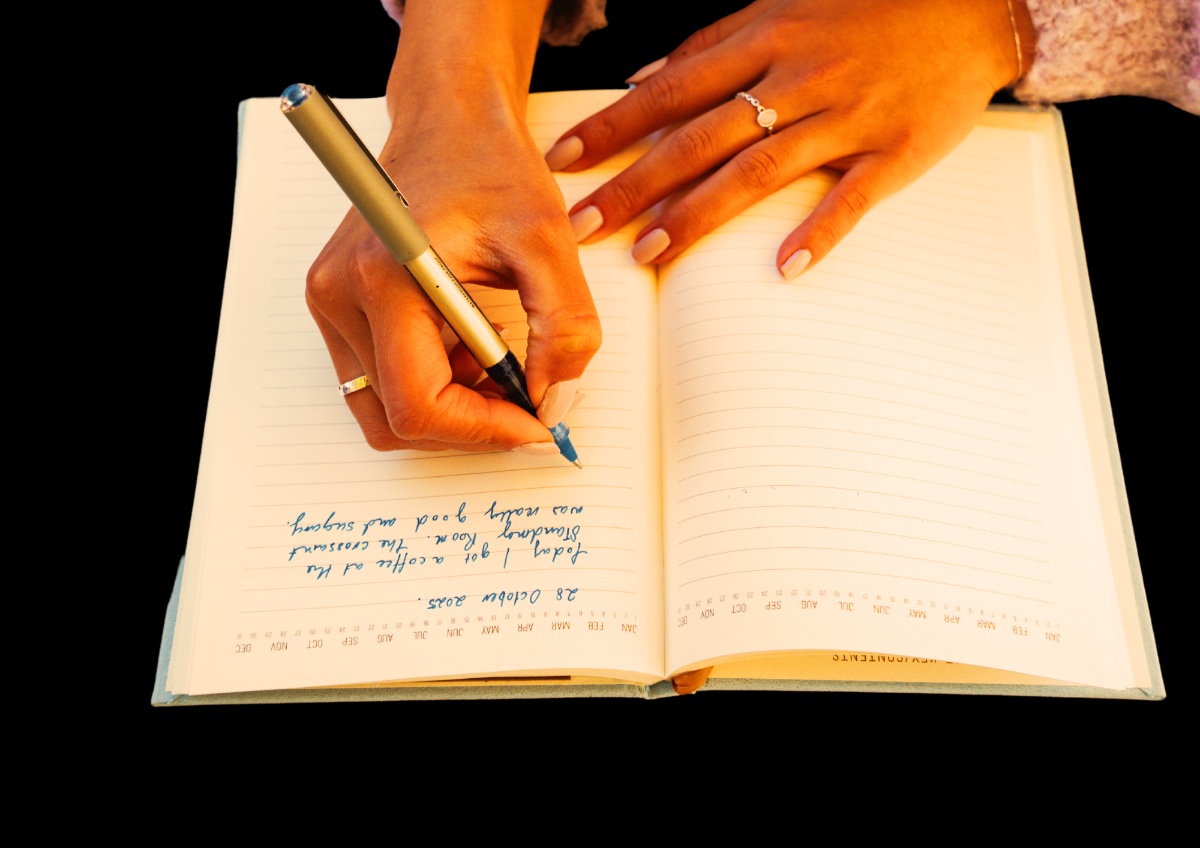
Morning pages is Julia Cameron's method: every morning, right after waking, fill three pages by hand, without stopping or editing. It is not a journal and not literature — it is a simple mental dump that lifts the noise out of your head before the day starts. The goal isn't a good sentence; it's a clear head.
What are morning pages?
Morning pages is one of the simplest self-knowledge practices there is: every morning, right after you wake, you write three pages by hand, continuously, without stopping. The writer Julia Cameron developed it and made it famous in her book The Artist's Way. The only rule is that you don't stop and you don't edit — whatever is in your head can come out.
Crucially, this is not a classic journal and not a piece of writing. There's no need for a topic, an arc, or a meaningful conclusion. Morning pages is stream of consciousness captured by hand: you simply put on paper the inner monologue that otherwise hums in the background all day.
Cameron originally recommended it to creatives — writers, painters, musicians — whose inner critic had blocked the path to making things. Since then it's become clear that the method works for anyone who wakes up with a crowded head. You don't have to be an artist to use it: it's enough that there's noise in you that you'd like to set down somewhere. And there is, in everyone.

How to do it step by step
The method is deliberately dumb and simple — that's exactly why it works. There's no technique to master, just a routine to follow. Here's what one morning looks like:
- Write right after waking. Before you check your phone or make coffee. The point is the sleepy, half-awake mind that isn't censoring yet.
- Fill three pages. Not two, not four — three. Long enough to get past the surface, short enough that it isn't a burden.
- Write by hand. Pen and paper. Handwriting is slower than typing, and that slowness is the point — it connects your head to your hand.
- Don't edit or correct. Don't re-read, don't cross out, don't worry about spelling. We're switching off the critic for now.
- Keep it private. No one reads it. That secrecy is what gives you the courage to be honest.
- Do it even when you don't want to. The bad, bored, resistant mornings count too — in fact, they're often the most important ones.
If you don't know what to write, write that you don't know what to write. Seriously: "I don't know what to write, this is stupid, I'm tired" — that's already words on the page. After a few lines, the mind starts moving on its own.
Why by hand, and why morning?
Handwriting is slower than thinking, and that's precisely the advantage. When you type, it's easy to stay on the surface and quickly produce "clever" sentences. The pen forces you to dwell on a thought, and that takes you deeper. The motion is physical — the friction of the paper, the movement of the hand — and that helps anchor your attention.
Morning is key because your mind is still rawer then, less defended. The daily mask hasn't been built up yet. The unprocessed residue of the night, the worries that spilled into tomorrow, the vague anxiety — it's all near the surface, easy to write out.
When you carry that noise out of your head and onto the page, mental capacity frees up. You no longer have to keep hauling around the "don't forget," "what if," and "why did I say that" loops. They're out, they're visible, and with that they lose part of their power.
Think of your head as an overloaded browser with thirty tabs open. Morning pages doesn't solve them all, but it closes them one by one until one or two essential ones remain. That's the difference between a scattered morning and a focused one — not that you have less to do, but that less is running pointlessly in the background.

What to write when you're blank
Many people fear they have "nothing to say." That's a mistake — there's always background noise, we've just gotten used to ignoring it. If you get stuck, you can start from these:
Write down the first thing that comes to mind. What you dreamed. What's weighing on you today. Who you're angry at. What you're afraid of. What you're putting off. What's missing. What you'd eat. Why you don't feel like writing. The point of the list is only to get you going — after two or three lines the text takes over and you no longer have to hunt for a topic.
Morning pages vs. reflective journaling
It's easy to confuse the two, but their goals differ. Morning pages empties: the point is to get the noise out, not to interpret it. Reflective journaling interprets: you ask questions, look for connections, draw a lesson.
The two don't compete — they complement each other. Morning pages is the morning airing-out: you open the window and let the stale air escape. Reflective journaling is more like the evening inventory: you sit down and look at what happened and what it means. Many people do morning pages in the morning and structured reflection at night.
If you're brand new to journaling, morning pages is a good entry point because there's no pressure to perform. You can't do it "well," because there's no good or bad — there are only three full pages.
There's a practical difference too: you almost never re-read morning pages. Reflective journaling you do, because there the re-reading is the whole point. So if there's something you want to keep and think about later, put it in the structured journal instead. The morning-pages notebook can be like a bin: it empties, and you don't need to open it again.

How to overcome resistance and perfectionism
The biggest obstacle isn't lack of time; it's the inner critic whispering "this is pointless," "this is stupid," "it's not good enough." Morning pages is designed to silence exactly that voice. Since no one reads it, and since it's deliberately unedited, there's no standard you could fail against.
If perfectionism gets in your way, give yourself permission to be bad. Write messily, all over the place, in half-sentences. The goal is for your hand to move, not for it to be pretty. The bad pages are just as valuable as the "good" ones — often that's where the real thing hides.
The resistant mornings are especially important. When you don't feel like it, that's exactly when the most suppressed material sits just below the surface. Don't skip those days — they bring the most insight.
The digital version: the brain dump
Pen and paper is the classic form, but it doesn't work for everyone. If your mornings are on the move, if handwriting hurts, or if you simply live digitally, the essence still carries over: emptying your head into a free, uncensored stream of text. This is called a brain dump.
A digital brain dump gives the same mental emptying: you sit down, open a blank surface, and write out what's in your head without stopping. Typing is faster, which is an advantage for some (it keeps up with the speed of thought) and a drawback for others (it slips into surface-level too easily). Try both and see which one empties you more.
Realistic results and timeline
Don't expect magic from the first morning. The effect of morning pages is cumulative: the first week is more strange than freeing. After a few weeks many people notice they start the day with a clearer head, less worry spinning in the background, and the recurring thoughts — the ones you only felt before — are suddenly there in writing, visible.
The long-term value isn't in any single page but in the patterns. When you write for weeks, you begin to recognize what keeps coming back: the same fear, the same decision, the same nagging thing. That's the raw material of self-knowledge. You don't have to analyze it as you go — it's enough that it comes out and gets recorded.
If you skip a day, you haven't failed. You continue the next day. Morning pages isn't a performance, it's hygiene — like brushing your teeth, only for your head.
Give yourself at least two or three weeks before deciding whether it works. The method doesn't take effect because you do it well once, but because you do it at all, many times. Regularity is the active ingredient, not the technique. And if you eventually find that paper isn't for you, that's not a failure either — in the next section we look at the digital route, which serves the same goal.
How Mirrify gives the same offload digitally
Mirrify's brain dump surface brings exactly this morning emptying to the screen: you sit down and write out what's weighing on you without stopping. But where paper keeps the text in a drawer, Mirrify keeps working with it: from your entries — your own words — it gradually recognizes the recurring themes and holds up a mirror, without you having to re-read weeks of material.
So you get the freeing offload of morning pages, plus the patterns that are hard to spot alone. The AI mentor never writes for you — it works from your text and helps you see what was, until now, only background noise. The spirit of the morning three pages stays intact; only now, emptying your head also leaves a trace you can learn from.
Frequently asked questions
What exactly are morning pages?
Morning pages is Julia Cameron's method from The Artist's Way: every morning, right after waking, you fill three pages by hand, continuously and without editing. It's not a journal and not literature but free stream of consciousness — the point is to empty the mental noise out of your head before the day begins, so you start with a clear mind.
Why three pages, and why by hand?
Three pages is long enough to get past surface thoughts but short enough not to be a burden. Handwriting matters because it's slower than typing, and that slowness connects your head to your hand and takes you deeper. The physical motion of the pen helps anchor your attention instead of surface-level idea-generating.
What should I write when I'm blank?
Write that you're blank — that counts too. After a few lines the mind gets moving on its own. You can start with what you dreamed, what's weighing on you today, what you're afraid of, or why you don't feel like writing. The list only exists to get your hand going; after two or three lines the text takes over.
What's the difference between morning pages and reflective journaling?
Morning pages empties: the goal is to get the noise out, not to interpret it. Reflective journaling interprets: you ask questions and draw lessons. The two complement each other — many people write morning pages in the morning to clear the head, then do structured reflection at night to think the day through.
Is there a digital alternative if I don't like writing by hand?
Yes — a brain dump gives the same mental emptying on a keyboard. Mirrify's brain dump surface delivers exactly this: you write out what's weighing on you without stopping, then from your own words it gradually recognizes recurring themes and holds up a mirror. So you get the release of the offload, plus the patterns.
How long until morning pages works?
Don't expect magic from the first morning — the effect is cumulative. The first week is more strange than freeing. After a few weeks many people start the day with a clearer head and begin recognizing recurring patterns in their writing. If you skip a day you haven't failed: you continue the next day, because this is hygiene, not performance.
Mirrify
Turn it into self-knowledge — in Mirrify
Mirrify is a self-knowledge system: journal, goals, habits, wheel of life and an AI mentor that knows you from your own words and turns insight into measurable change.
- Journal, morning and evening reflection, habits, goals and to-dos — in one system.
- An AI mentor that remembers your earlier entries and shows you your patterns.
- Write with no connection: it syncs as soon as you are back online.
Related from the knowledge base
 Daily practiceBrain dump journalingClearing your head digitally.15 min→
 Daily practiceHow to start journalingThe basics of getting going.15 min→
 Daily practiceMorning reflectionStarting the day.8 min→
MirrifyThe self-knowledge system.→
Daily practiceMorning reflectionStarting the day.8 min→
MirrifyThe self-knowledge system.→
 ToolsDigital or paper journal? Which one to chooseDigital vs paper journal, honestly compared: paper wins on focus, digital…7 min→
 Daily practiceGratitude as a tool, not a decorationIf your gratitude list became “family, health, coffee” after two weeks,…9 min→