Knowledge base › Tools
I run my life in five apps — how do I merge them into one system?

The usual setup looks like this: the journal in a notes app, mood in a mood tracker, habits in a streak counter, goals in a spreadsheet or a Notion page, money in a budgeting app — and lately a chatbot you tell all of it to as well. Five or six surfaces, five or six rituals, and the nagging sense that you are doing a lot of admin without getting anywhere. This article is about what the real problem is, what is worth merging, what is not — and how to switch in a single evening.
The number of icons is not the problem
Worth saying plainly, because "everything in one app" is not a value in itself. Using several apps is perfectly fine as long as each does one well-defined job. The trouble starts when the answer you are looking for lives between two apps. That has three concrete costs:
- The pattern lives where the signals meet. Knowing that Tuesday was a bad day does not make you wiser about yourself. Knowing that Tuesday was bad, that you were up until two on Sunday night, that you blew the budget that day, and that your journal contains the same sentence you wrote in March — that does. No single-purpose app sees that connection; only you do, in your head, if you happen to have the energy.
- A friction tax. Of five daily rituals, about three are gone within six weeks. It is not a discipline problem: every extra open, login and form is a small exit point. And the two that survive are usually the shallowest two, because they are the fastest.
- Nothing summarises. Daily data is not knowledge. Knowledge needs a weekly moment where something — or someone — puts it together. Five apps give you five separate statistics; the weekly picture exists nowhere.
In short
- The issue is not the number of apps — it is that the pattern lives between the signals, so nobody sees it.
- Merge what is about you: journal, mood, habits, goals, values, decisions, money patterns.
- Keep separate: calendar, work task tracker, banking app, photos, medical data.
- The switch is one evening plus 30 days. Archive old data, don't migrate it.
What to merge — and what to leave alone
This is the decision that matters, and it is where most "digital declutters" fail: people try to put everything in one place, then revert three weeks later. The rule is simple: merge what explains each other; leave separate what has a different owner or a different rhythm.
| Area | Into one system? | Why |
|---|---|---|
| Journal, reflection | Yes — this is the core | This is the text patterns can be read from |
| Mood, energy | Yes | Descriptive alone; explainable next to the journal |
| Habits, streaks | Yes | This is where insight becomes a daily step |
| Goals, OKRs | Yes | Without a goal, insight evaporates |
| Values, wheel of life, Ikigai | Yes | The frame you measure weekly decisions against |
| Decision journal | Yes | Re-read later it teaches the most — if the context is there |
| Money (the self-knowledge side) | Yes | Spending patterns are emotional patterns too |
| Calendar | No | Different owner, shared with others, different rhythm |
| Work task tracker | No | Team territory — not your self-knowledge ground |
| Your bank's app | No | That is the source; the system holds the summary, not transactions |
| Photos, medical measurements | No | A separate genre with its own storage and legal frame |
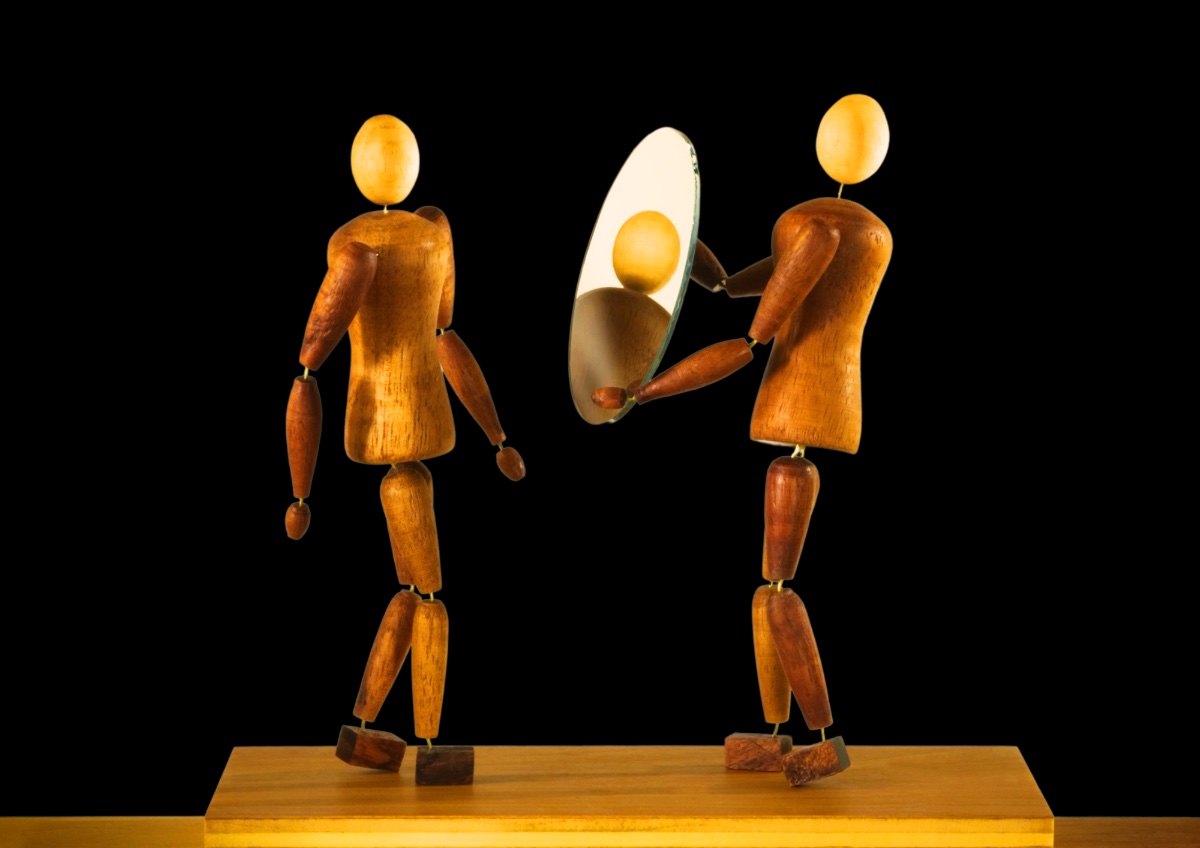
The four-step merge
One evening is enough. You do not need a day off, and you do not need to move your entire past.
- Inventory — 20 minutes. Write down which app you use for what, and when you last opened it. Cross out anything untouched for two months: those are zombie apps that only generate guilt. Mark the three that hold what is genuinely about you.
- Pick the core — 10 minutes. The centre should be whatever carries the largest share of the list at acceptable quality and lets you export at any time. Do not pick the prettiest; pick the one with the least daily friction on entry.
- Export and archive — 20 minutes. Request exports from the old apps (PDF, CSV, text), put them in one folder, and do not migrate them. Old entries rarely produce new insight in hindsight; the archive is there so you know nothing is lost.
- One entry point, one weekly moment — 10 minutes. Set a daily time (typically morning or before bed, 3–5 minutes) and 20 minutes a week to look back. Those two moments are the system — everything else is just surface.
For the first fortnight you will open the old apps by reflex. That is normal. From week three the picture starts to form that nobody could show you before, because half the data was somewhere else.
What to check before you choose a central tool
- Does it connect, or just store? This is the decisive question. Plenty of "all-in-one" apps are really five separate modules under one icon — the same fragmentation, now inside a menu. What matters is whether a mood, a habit and a journal entry meet in the same analysis.
- Is there a weekly or monthly layer? Without it you are collecting data and calling it knowledge.
- Can you take your data out? Without one-click export you are not consolidating, you are getting locked in.
- What happens to your content? Is it used to train models, shared with third parties, what happens on account deletion. This is your most personal dataset — check before you put it in one place. We have a seven-question checklist for exactly this.
- Is it where you are? On your phone and your computer, in your language. If either is missing, the daily routine breaks.

What a day looks like when it is in one place
Three minutes in the morning: mood in one tap, the priority for the day, one guided question you answer. During the day, a quick note or voice memo when something occurs to you. Two minutes in the evening: what worked, what didn't, the one thing for tomorrow. Twenty minutes on Sunday: what the week shows — what repeated, which goal moved, where the spending slipped, and the one thing you will do differently next week.
The difference is not the number of surfaces. It is that on Sunday evening there is a picture that comes together. Five good apps cannot do that; it requires the signals to meet in one place.
When not to consolidate anything
If your current setup works and nothing is missing, leave it. If you are in a hard period, a switch is extra load — postpone it. And if you use one app for one job and you are happy, there is nothing to merge: "one system" is not a goal, it is a means to seeing connections. With nothing to connect, it is pointless.
Frequently asked questions
Is it really a problem to run my life across several apps?
Not in itself — only when the answer you want lives between two apps, and when friction quietly kills half your rituals within six weeks.
What should I merge, and what not?
Merge what is about you and explains each other: journal, mood, habits, goals, values, decisions, money patterns. Keep the calendar, the work tracker, the banking app, photos and medical data separate.
Do I have to migrate all my old data?
No — usually a mistake. Export and archive it, start fresh in the new place. A few weeks of current data is enough for the first patterns.
How long does the switch take?
One evening for inventory and setup, then 30 days for the routine to settle. The first two weeks feel odd.
How do I choose a central tool?
Five criteria: coverage, whether it connects signals or merely stores them, a weekly summary layer, full export, and what happens to your content.
When should I NOT consolidate?
When the current setup works; when you have no capacity for a switch right now; or when you are not looking for connections across areas.
Mirrify
What if it were all in one place
Mirrify is a self-knowledge system — not just another journal: journaling, habits, goals, wheel of life, Ikigai, a decision journal and finances in one place, plus an AI mentor that works from your own entries to surface recurring patterns and build measurable change. Not five modules under one icon — one system where the signals meet.
- Journal, morning and evening reflection, habits, goals and to-dos — in one system.
- An AI mentor that remembers your earlier entries and shows you your patterns.
- Write with no connection: it syncs as soon as you are back online.
Related from the knowledge base
 ToolsWhy Mirrify is different from a journal app, an AI journal or a chatbotFrom insight to measurable change.16 min→
 ToolsBest self-improvement apps — what to look forWhat matters beyond the feature list.14 min→
 ToolsMirrify vs Notion: build a system or use one?When building your own is worth it.7 min→
 ToolsWho can read my journal? 7 questionsA checklist for any app.9 min→
 ToolsJournal, mood tracker, habit tracker or coaching app…Five self-improvement app categories, five completely different jobs.9 min→
 ToolsSwitching journal apps? How to carry your last few…Export, format loss, and the 80/20 rule: most of your old journal is noise.13 min read→